
The tradition of nonviolent direct action: Part 4
Global expansion from Gandhi to the present. This is part 4 of a 4-part series exploring how nonviolent direct action developed from early Christian conscience into a global method of peaceful resistance.
From method to global force
By the early 20th century, nonviolent direct action (NVDA) had taken recognisable form. What had developed gradually across centuries — from early Christian witness to the disciplined practices of the Quakers — was now a coherent method.
What remained was to demonstrate that this method could operate on a mass political scale, capable of confronting systems of power across entire societies.
In this period, NVDA moved beyond its original communities and began to spread across nations and movements, becoming a global force.
That transformation began in the campaigns of Mohandas Karamchand Gandhi.
Gandhi and mass nonviolent resistance
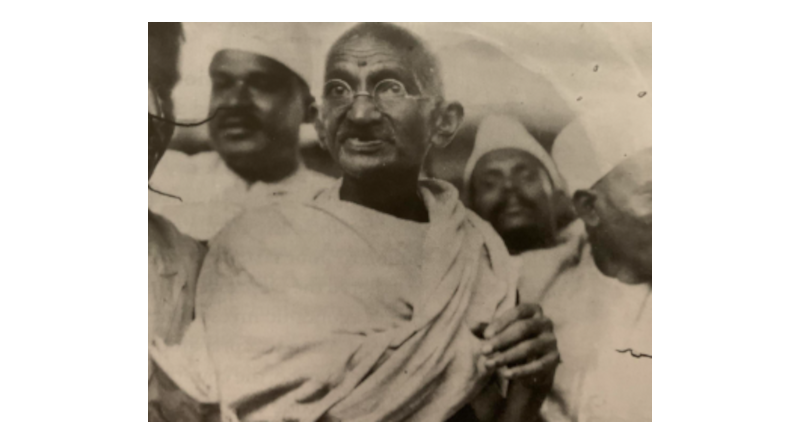
In the early 20th century, the struggle against British rule in India produced one of the most influential demonstrations of nonviolent resistance in modern history. At its centre stood Mahatma Gandhi, who believed that injustice could be confronted through disciplined, collective action without violence.
Gandhi developed the concept of satyagraha, often translated as ‘truth-force’ or ‘soul-force’. Rather than meeting oppression with violence, protestors refused cooperation with unjust systems while maintaining strict discipline in nonviolence. This was not passive submission, but organised struggle rooted in sacrifice, courage and moral confrontation.
One of the clearest examples came in 1930, when Gandhi led thousands of followers on the Salt March, openly defying British control of salt production. By breaking the law in a peaceful and public manner, the march exposed the injustice of imperial rule and inspired widespread participation in the independence movement.
Gandhi drew on many sources, including the writings of Henry David Thoreau and Leo Tolstoy, as well as older religious traditions of nonviolence. What he demonstrated was not the invention of NVDA, but its transformation into a mass political force.
From method to movement
The success of Gandhi’s campaigns showed that nonviolent direct action could move beyond small communities and become a powerful force in political life. Ideas, tactics and strategies began to travel across borders, carried by activists, writers and networks of reform.
NVDA was no longer confined to particular religious traditions. It was becoming a method that could be adapted to different cultures, political systems and struggles. Its strength lay in its flexibility: it could be used against colonial rule, racial injustice, authoritarian governments and social inequality.
This shift marked a turning point. What had once been a tradition rooted in specific communities of conscience was becoming a transferable method of resistance, capable of crossing borders and adapting to new struggles.
Martin Luther King Jr. and the civil rights movement
The most influential example of nonviolent direct action in the mid–20th century emerged in the United States during the struggle for racial equality.
Inspired in part by Gandhi’s example, Martin Luther King Jr. and other civil rights leaders organised campaigns based on marches, boycotts, sit–ins and acts of civil disobedience. Protestors confronted segregation and racial injustice through disciplined nonviolence, exposing the brutality of discriminatory systems to national and international audiences.
A key figure in translating these ideas into practical strategy was Bayard Rustin who studied Gandhian methods and helped shape their application in the United States. He was also the author of the Quaker pamphlet Speak Truth to Power, which made the phrase world famous. Rustin played a central role in organising major campaigns, including the 1963 March on Washington, and in developing nonviolent action as a disciplined, teachable method.
These campaigns demonstrated that NVDA could be a powerful tool within a modern democratic society. Media coverage played a crucial role. Images of peaceful demonstrators facing police violence and mob hostility helped shift public opinion and contributed to major legal and political reforms.
The civil rights movement also showed that NVDA could be adopted by broad coalitions. While religious faith remained central to many participants, the method itself was no longer limited to explicitly religious communities. It had become part of public political life.
A global method of struggle
In the decades that followed, NVDA spread across the world. It appeared in anti-colonial struggles, campaigns against dictatorship, movements for democracy and protests against racial oppression.
In South Africa, nonviolent protest formed part of the broader struggle against apartheid. In Eastern Europe, movements in the late 20th century used strikes, demonstrations and civil resistance to challenge authoritarian regimes. In Poland, the Solidarity movement used organised strikes and nonviolent resistance to confront state power, demonstrating again the effectiveness of disciplined collective action.
This global spread did not erase the movement's earlier history. Rather, it confirmed that methods first developed in small communities of conscience could be adapted to mass politics and international struggles.
NVDA had moved beyond its original religious roots. It was now a recognised method of political action.
Quakers in the modern world
Even as nonviolent direct action expanded globally, Quakers remained part of the tradition they had helped shape.
During the First World War, American Friends established the American Friends Service Committee to provide relief work and support conscientious objectors. Over time, this work expanded into broader programmes of humanitarian aid, peacebuilding and social justice.
In 1947, the Nobel Peace Prize was awarded jointly to the Friends Service Council in Britain and the American Friends Service Committee in the United States. The Nobel Committee recognised their longstanding commitment to peace and international cooperation.
By the mid-20th century, however, Quakers were no longer the primary drivers of NVDA. The method had moved beyond its origins, taken up by a wide range of movements and communities. Yet Friends remained a living link to its historical development, continuing to practise forms of witness rooted in conscience and nonviolence.
A living and evolving tradition
In the 21st century, nonviolent direct action remains one of the most widely used methods of peaceful protest. Movements for democracy, human rights, climate justice and social equality continue to rely on marches, boycotts, strikes and symbolic acts of resistance.
These methods have been adapted to new political conditions, technologies and global audiences. Digital communication has allowed movements to organise rapidly and reach international attention. Yet the underlying principles remain unchanged: collective action, non-cooperation and disciplined nonviolence.
Across different contexts, NVDA continues to evolve. It is not a fixed set of tactics, but a flexible approach shaped by the needs of those who use it.
A tradition that continues
From hidden symbols scratched into stone, to dissenting communities living apart from power, to Quakers transforming witness into organised practice, and to mass movements confronting injustice across the world, the history of nonviolent direct action is the story of conscience made visible.
What began as scattered acts of refusal has become a global method of resistance — one that continues to show that power can be challenged without violence, and that disciplined non-cooperation can reshape societies.
The tradition endures, not as a relic of the past, but as a living practice — still unfolding wherever people choose to confront injustice without taking up arms.