
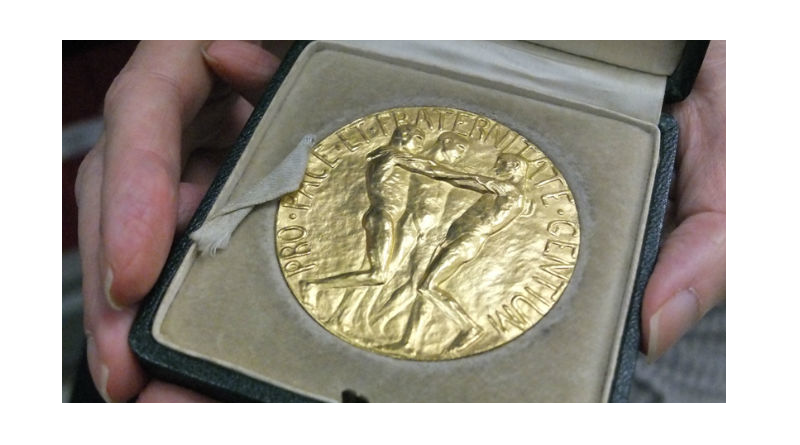
1947 Nobel Peace Prize
The 1947 Nobel Peace Prize was awarded to Quakers in recognition of their work for both peace and humanitarian aid.
300 years of Quaker work
The Nobel Committee jointly awarded the prize to the Friends Service Council (FSC) and the American Friends Service Committee (AFSC), honouring their relief work during and after the two world wars. The FSC and the AFSC accepted the award on behalf of Quakers worldwide.
The prize also recognised 300 years of Quaker efforts to heal rifts and oppose war. In particular, it praised the two recipient Quaker organisations for feeding starving children and helping rebuild post-war Europe.
In his presentation speech, Gunnar Jahn, the chairman of the Nobel Peace Prize Committee, said:
“The Quakers have shown us that it is possible to translate into action what lies deep in the hearts of many: compassion for others and the desire to help them — that rich expression of the sympathy between all men, regardless of nationality or race, which, transformed into deeds, must form the basis for lasting peace.”
In Henry Cadbury's acceptance speech for the Quakers, he spoke about the Nobel Peace Prize being awarded to a body and not an individual.
“The common people of all nations want peace. In the presence of great impersonal forces they feel individually helpless to promote it. You are saying to them here today that common folk, not statesmen, nor generals nor great men of affairs, but just simple plain men and women, like the few thousand Quakers and their friends, if they devote themselves to resolute insistence on goodwill in place of force, even in the face of great disaster past or threatened, can do something to build a better, peaceful world.”
Benefits of being a prize winner
Nobel Peace Prize winners sometimes join together to consider current issues, and occasionally to speak out on them.
But the greatest privilege of being a Peace Prize winner is to be able to make nominations each year to the Oslo-based Nobel Peace Prize Committee. AFSC has done this every year since 1948, when it first nominated Mahatma Gandhi.
Since the mid-2000s, Quaker Peace & Social Witness (the successor to the FSC) has also participated in the process, appointing a Quaker to serve on AFSC's Nobel Peace Prize Nominating Task Group.
Each spring, suggestions are invited and then a careful process of research and discernment follows. Unlike most nominees, Quaker nominees are deliberately publicised to encourage and strengthen their work.
The Society of Friends, as a group, had first been nominated for the prize as early as 1912, just 11 years after the award was founded. It was nominated again in 1923, 1924 and 1936, each time reflecting Quaker relief work among the victims of war and famine.
That string of earlier attempts makes 1947 easier to place. It was not a sudden discovery, but recognition finally catching up with three centuries of quiet work. The prize did not make the Quakers who they were — it simply said so, publicly, at last.