
Amnesty International
Amnesty International is a global human rights movement founded in 1961 after British lawyer Peter Benenson launched an appeal for prisoners of conscience. It grew from letter-writing campaigns into an international organisation confronting torture, the death penalty and other abuses, winning the Nobel Peace Prize in 1977 and later widening its work across the full range of human rights.
Sections
In numbers
1
Nobel Peace Prize awarded to the organisation for campaigning against torture.
10,000,000+
Supporters, members, and activists fighting for human rights across the globe.
150+
Countries and territories maintaining an active organisational presence or movement base.
9
Volunteer members comprising the democratic International Executive Committee governing the organisation.
370,000,000
Total global income in Euros raised to fund human rights advocacy.
1,700,000+
Individual citizens financially supporting the global movement through direct personal donations.
263
Active local community groups currently operational across the United Kingdom.
8,776
Academic institutions utilising the official human rights education materials provided.
3,491
Individuals who successfully completed leadership training for grassroots human rights activism.
Timeline
-
1961The forgotten prisoners
Peter Benenson launched the Appeal for Amnesty after publishing “The Forgotten Prisoners”, calling on ordinary people to act for prisoners of conscience around the world.
```
-
1962A permanent movement takes shape
What began as a one-year appeal developed into a permanent international organisation built around research, letter-writing and political impartiality.
-
1972–73Campaign for the Abolition of Torture
Amnesty launched its first global campaign against torture, combining detailed research with coordinated international pressure for its abolition.
-
1973Political Prisoners in South Vietnam
Amnesty published its major report examining civilian political detainees, prison conditions and allegations of torture in South Vietnam.
-
1973The first Urgent Action
Thousands of supporters were mobilised on behalf of detained Brazilian academic Luiz Basilio Rossi, establishing a campaigning method Amnesty still uses today.
-
1977The Nobel Peace Prize
Amnesty received the Nobel Peace Prize for its defence of human dignity and its work on behalf of people subjected to imprisonment, violence and torture.
-
1984The second campaign against torture
Amnesty launched its second worldwide torture campaign, shifting greater attention towards prevention through its 12-point programme.
-
1991Beyond the prisoner of conscience
A widened mandate strengthened Amnesty's work on abuses beyond imprisonment, including violations committed by armed opposition groups.
-
2000Campaign Against Torture
A third global torture campaign focused on prevention, ending impunity and confronting the discrimination that left particular groups vulnerable to abuse.
-
2001Human rights become indivisible
Amnesty adopted a broader mission embracing economic, social and cultural rights alongside its established work on civil and political rights.
-
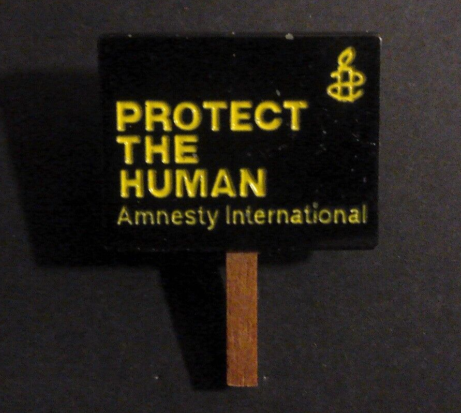
2005Protect the Human
Amnesty International UK launched a nationwide initiative using music, art, film and everyday participation to involve more people in defending human rights.
-
2014Freedom Candles
Sculpted candles depicting human rights abuses burned away to reveal bronze symbols of hope, turning Amnesty's oldest emblem into a new campaigning medium.
-
Present dayThe candle still burns
Amnesty continues to investigate abuses and mobilise millions of people worldwide across a broad range of internationally recognised human rights.
Brief history
Before the candle wrapped in barbed wire (1950s - 61)
Before Amnesty International existed, Peter Benenson was already using the law to challenge political repression. During the 1950s, the British barrister observed political trials in Cyprus and elsewhere. In Cyprus he met Eric Baker, a Quaker peace activist whose research and contacts helped shape Benenson’s developing concern for people imprisoned because of their beliefs. Baker’s Quaker commitment to practical action against suffering was one of several influences present at Amnesty’s birth.
The forgotten prisoners (1961)
On 28 May 1961, The Observer published Benenson’s article “The Forgotten Prisoners”. Amnesty’s own founding account centres on his outrage at the imprisonment of two Portuguese students after a toast to liberty, but the article ranged much wider, describing people jailed around the world for peacefully expressing political or religious beliefs. Benenson called them “prisoners of conscience” and asked readers to write on their behalf as part of a one-year Appeal for Amnesty.
The response travelled far beyond Britain. Newspapers reprinted the appeal, volunteers came forward and local groups began adopting prisoners from contrasting political systems, deliberately preventing the campaign from becoming identified with either side of the Cold War.
The candle begins to burn (1961 - 69)
What had been planned as a temporary appeal became a permanent organisation. Amnesty developed a method based on research, publicity and ordinary people writing directly to governments about individual prisoners. Its candle wrapped in barbed wire became the movement’s enduring symbol: a small light surrounded by repression, but not extinguished by it.
Growth was rapid. Within its first decade Amnesty had 18 national sections and 850 groups in more than 27 countries, while gaining consultative status with international bodies including the United Nations. Its central concern remained prisoners of conscience, but investigations into individual cases increasingly exposed wider patterns of abuse.
The flame grows stronger (1972 - 77)
On Human Rights Day in December 1972, Amnesty launched its first Campaign for the Abolition of Torture. During 1973 the campaign gathered international momentum through research, public mobilisation and a major conference in Paris. That same year Amnesty published Political Prisoners in South Vietnam and issued its first Urgent Action, mobilising supporters after the detention of Brazilian academic Luiz Basilio Rossi.
These methods pushed Amnesty beyond campaigning solely for individual prisoners. Research reports, emergency appeals and coordinated international pressure became central to its work. In 1977 Amnesty was awarded the Nobel Peace Prize for its contribution to worldwide respect for human rights. That year it also intensified its opposition to the death penalty, another campaign that would become part of its permanent work.
Beyond the prisoner of conscience (1980s - 90s)
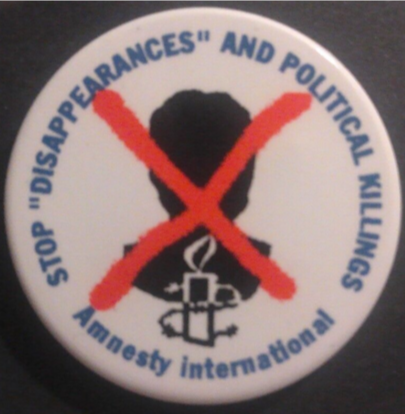
Amnesty’s work continued to widen. In 1984 it launched its second Campaign for the Abolition of Torture, accompanied by Torture in the Eighties and a 12-point programme focused increasingly on preventing torture rather than simply exposing it. During the following years its concerns expanded to include disappearances, extrajudicial killings and a wider range of abuses. In 1991 it significantly extended its work on abuses committed by armed opposition groups.
The prisoner of conscience remained central, but Amnesty was becoming something broader: an organisation concerned not only with who was imprisoned, but with the systems and practices that allowed human rights abuses to continue.
Human rights without borders (2000 - 09)
In October 2000 Amnesty launched its third worldwide anti-torture drive, the Campaign Against Torture, concentrating on prevention, impunity and discrimination. The following year it broadened its mission to encompass all human rights, allowing much greater involvement with economic, social and cultural rights alongside the civil and political rights that had shaped its earlier decades.
New campaigning methods appeared alongside the old ones. In Britain, Protect the Human was launched in 2005, using music, art, film and everyday participation to draw a wider public into human rights activism. The tools were changing, but the underlying method remained familiar: make distant abuses visible and give ordinary people a practical way to respond.
The candle still burns (2010s - present)
That connection between symbol and action remained visible in the 2014 Freedom Candles initiative, in which sculpted candles representing human rights abuses burned away to reveal bronze images of the change campaigners hoped to achieve.
Amnesty today describes itself as a movement of more than 10 million people across over 150 countries and territories. Its work now stretches across a far wider field than the organisation Benenson and Baker helped create in 1961. Yet more than six decades after a newspaper appeal asked readers to act for strangers in prison, the principle remains recognisable: human rights become harder to violate in silence when someone, somewhere, is prepared to bear witness.

Badges
Showing 1 to 10 of 17 total badges