| | by admin | | posted on 12th May 2026 | Symbols | | views 10 | |
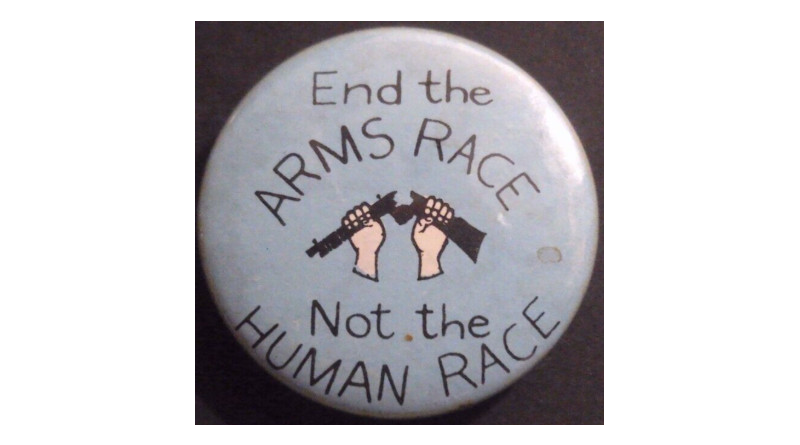
The Broken Rifle symbol, far from a gentle plea for harmony, represents the definitive, physical act of conscientious objection &emdash; the snapping of an instrument of state violence by the very hands meant to wield it.
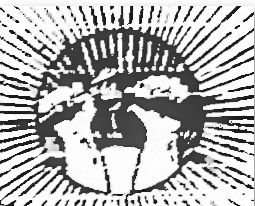
Not emerging from a grand international summit or a commissioned campaign, the Broken Rifle symbol came from a deliberate act of editorial defiance in the Netherlands. In January 1909, the Broken Rifle first appeared on the cover of De Wapens Neder (Down with Weapons), the principal periodical of the International Antimilitarist Union.
In an era steadily arming itself for the looming catastrophe of the First World War, the image served as a visual manifesto. It bypassed abstract political theory, offering instead a blunt, graphic directive to the working classes: the absolute refusal to participate in the machinery of slaughter.
Traditional symbols of pacifism, such as the dove, the olive branch, and the rainbow, represent an idealized state of harmony. They are passive, depicting the absence of conflict rather than the method of achieving it.
The Broken Rifle , by contrast, relies on the mechanics of physical intervention. It illustrates an action — the snapping of iron and wood. Early iterations of the symbol made this agency explicit, depicting a soldier physically breaking his own weapon across his knee.
It is not a prayer for peace; it is the visual equivalent of mutiny. The power of the image lies in its definitive assertion that wars cease only when the individuals tasked with fighting them refuse to act as instruments of destruction.
The symbol inevitably migrated from the printed page into the tactile world. In 1923, Ernst Friedrich, a Conscientious Objector, opened the Anti-Kriegsmuseum (Anti-War Museum) in Berlin, mounting a large bas-relief of the Broken Rifle above its entrance.
More importantly, the museum transformed the image into a wearable artifact, distributing it as brooches, tie pins, and belt buckles. This evolution turned an abstract political conviction into a personal, everyday declaration worn upon the body.
By 1931, War Resisters' International, a global network founded on the explicit pledge to refuse all support for war, officially adopted the Broken Rifle . It ceased to be merely a localized graphic and became the unifying mark of an international movement, one that would soon face the severe test of sheltering those fleeing the rise of fascism.
Over a century after its inception, the Broken Rifle endures not as a relic of past conflicts, but as a continuing challenge to the present.
War Resisters' International still utilizes the symbol today, standing in solidarity with modern Conscientious Objectors who face imprisonment for refusing compulsory military service across the globe.
While nations continue to stockpile armaments, the emblem retains its quiet, unyielding authority.
It stands as a permanent reminder of the ultimate power of individual agency, a testament that the machinery of war, no matter how vast, remains entirely powerless unless those ordered to operate the weapons choose to comply.