| | by admin | | posted on 15th April 2026 | Individuals | | views 6 | |
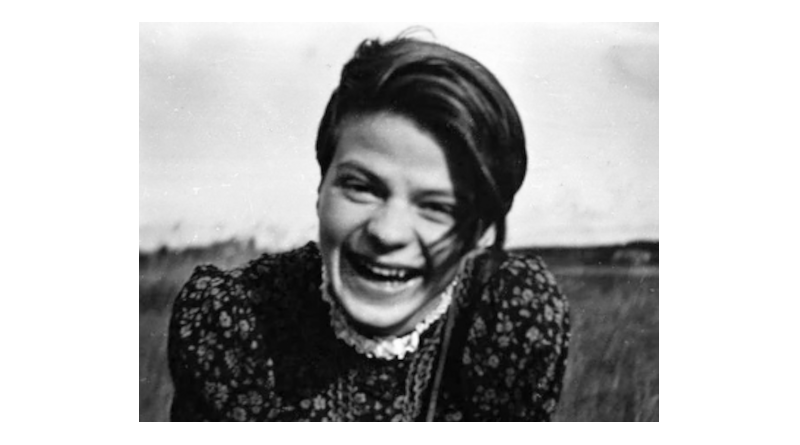
Sophie Scholl carried leaflets for the White Rose, a student resistance group in Nazi Germany, into a university and brought hidden opposition into the open.
By the early 1940s, public life in Nazi Germany had narrowed into something tightly controlled. Universities were expected to produce loyalty. Students were organised, observed, and directed into roles that reinforced the state rather than questioned it.
Sophie Scholl entered this environment as a student at the University of Munich, where she studied biology and philosophy. She had grown up within the system, joining the League of German Girls as a teenager and taking part in the ordered life it offered. Participation was ordinary, and in many ways expected.
What changed was not immediate resistance, but mounting pressure. Her father’s scepticism towards the regime introduced one line of tension. Her brother Hans, already moving towards opposition, introduced another. Books and conversations added further weight. Over time, the expectations placed on her came into direct conflict with what she understood to be right.
This shift did not produce sudden action. It produced refusal.
Sophie reached a point where she could no longer align her thinking with the demands of the system around her. This was not yet public dissent. It was a withdrawal from agreement, a decision not to accept what was being presented as normal.
This stage matters because it grounded what followed. Her later actions did not come from impulse or youthful drama. They came from a position already formed, where silence had begun to feel like a kind of participation.
Within the university, Sophie became part of a small group of students and one professor who shared similar concerns. This group became known as the White Rose.
Its members included her brother Hans Scholl, Alexander Schmorell, Willi Graf, Christoph Probst, and the academic Kurt Huber. They were not organised as a movement in the usual sense. They had no public platform, no protection, and no expectation of safety.
What they shared was a decision to speak.
The method they chose was deliberate. They wrote leaflets.
Between 1942 and early 1943, the group produced a series of texts that criticised the Nazi regime and called for resistance. These leaflets drew on philosophy, religion, and literature. They addressed the reader directly, not as part of a crowd but as an individual capable of judgement.
They named what the regime required people to ignore, including the persecution and murder of Jews. They argued that responsibility did not disappear within a system, and that individuals remained accountable for what they allowed to happen.
In a state that depended on controlling information, this kind of writing carried weight. It introduced ideas that were meant to be absent.
Writing alone was not enough. The leaflets had to be distributed.
The group mailed copies across Germany and Austria and left them in public places. Each act of distribution required movement through spaces where surveillance was normal and discovery carried serious consequences.
This was the point at which thought became visible. A leaflet left in a corridor or delivered through the post could not be taken back. It existed in the world, outside the control of those who wrote it.
Sophie Scholl’s role within this was direct. She took part in the physical act of distribution, carrying the material into spaces where it could be found.
On 18 February 1943, Sophie and Hans brought a suitcase of leaflets into the University of Munich. They placed stacks in corridors and outside lecture halls, working quickly between classes.
As they prepared to leave, Sophie made a final decision. From an upper gallery overlooking the atrium, she pushed the remaining leaflets over the edge, sending them across the floor below.
The action drew attention. A caretaker saw what had happened and reported them. They were arrested and handed over to the Gestapo.
Interrogation followed, and within four days they were brought before the People’s Court, where trials were structured to secure conviction. During questioning and at trial, Sophie did not withdraw from what she had done. Instead, she stated it clearly.
“Somebody, after all, had to make a start. What we wrote and said is also believed by many others. They just don’t dare express themselves as we did.”
On 22 February 1943, Sophie Scholl, Hans Scholl, and Christoph Probst were executed by guillotine. She was 21 years old.
Sophie Scholl did not act because success was likely. She acted in conditions where the risks were clear and the consequences severe. The decision to continue did not depend on outcome, but on the refusal to remain silent.
A second statement, associated with her final hours, captures this position:
“Such a fine, sunny day, and I have to go, but what does my death matter, if through us thousands are awakened and stirred to action?”
Her action did not expand into a wider movement at the time. It remained contained, interrupted, and brought to an end.
But it established something that could not be undone. The White Rose had spoken publicly. The fact of dissent had been made visible inside a system that depended on its absence.