
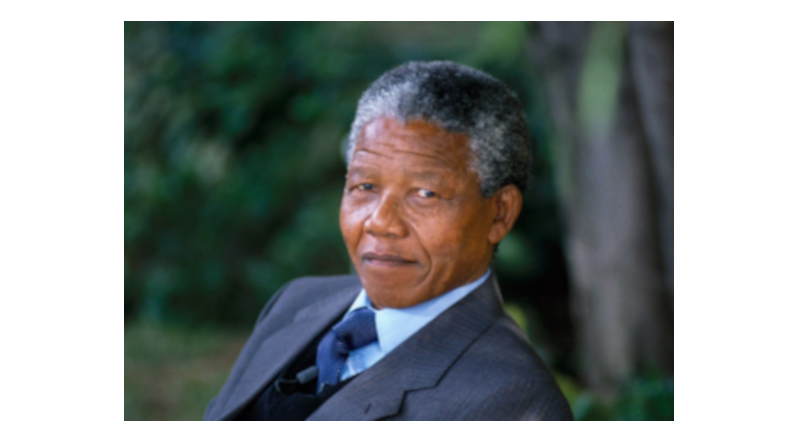
Nelson Mandela: When nonviolence was tested
The life of Nelson Mandela (1918 - 2013) reveals the point at which nonviolent resistance is tested by the realities of power, and reshaped under pressure.
A life shaped by injustice
Nelson Mandela’s life traces the point at which nonviolent resistance meets its limits. Born in 1918 in rural South Africa, he came of age in a society structured by racial hierarchy and exclusion. Trained as a lawyer, he moved into the urban world of Johannesburg, where segregation was not only social but increasingly formalised in law.
His early political work took place through the African National Congress, where campaigns focused on petitions, legal challenges, and organised protest. Like others before him, Mandela began from the assumption that injustice could be confronted without violence.
Yet the system he faced was rigid, expansive, and enforced with growing intensity. Laws multiplied, rights narrowed, and opposition was met with repression. The question was not whether resistance was necessary, but what form it could take.
Early commitment to nonviolence
In its early phases, the struggle against apartheid drew on established traditions of nonviolent resistance. Protest campaigns, strikes, and acts of civil disobedience were used to challenge unjust laws and mobilise public opposition.
This approach was not accidental. It reflected both moral conviction and practical judgment. Nonviolence allowed broad participation and made injustice visible, while avoiding the immediate escalation that armed conflict would bring.
Mandela supported this strategy. At this stage, nonviolent resistance appeared not only possible but necessary, offering a way to confront power without reproducing its methods. At this stage, nonviolence appeared not only possible, but sufficient.
The breaking point (1960)
In 1960, the limits of this approach became starkly visible. In the township of Sharpeville, police opened fire on a crowd of unarmed protesters, killing more than sixty people. The demonstration had been peaceful. The response was not.
The aftermath marked a turning point. The government banned opposition organisations, intensified repression, and closed down many of the remaining spaces for lawful protest. Nonviolent resistance had not failed in principle, but it was being met with a level of force that raised new questions about its viability.
The conditions of the struggle had changed. What had been a viable method now appeared exposed.
Turning to armed struggle
In the years that followed, Mandela and others concluded that a different form of resistance was required. In 1961, he helped to establish Umkhonto we Sizwe, the armed wing of the African National Congress.
This shift did not represent a rejection of nonviolence as an ideal. It was a response to the narrowing of political space. Where peaceful protest had been met with bans, arrests, and lethal force, the argument was made that resistance had to adapt.
“A freedom fighter learns the hard way that it is the oppressor who defines the nature of the struggle.”
Violence, in this context, was framed as limited and strategic. Early actions focused on sabotage rather than direct attacks on people, aimed at infrastructure rather than lives. Even here, restraint remained part of the logic. The intention was not to abandon discipline, but to adjust the form it took.
At this point, the tradition of nonviolent resistance did not disappear, but it fractured. Yet the shift introduced a tension that would remain unresolved. If nonviolence depended on conditions that no longer existed, could it still function as a method of resistance?
Imprisonment and transformation (1962-1990)
Mandela was arrested in 1962 and sentenced to life imprisonment. He would spend twenty-seven years in prison, much of it on Robben Island, separated from the movement he had helped to shape.
During these years, his role changed. From organiser and strategist, he became a symbol. The struggle continued beyond him, but his imprisonment gave it a focal point that extended internationally.
Time in prison also altered the nature of his leadership. Isolated from direct action, Mandela engaged in reflection, dialogue, and negotiation with his captors. The struggle did not disappear, but its form shifted again, away from immediate confrontation and toward the possibility of political settlement.
Return to negotiation
When Mandela was released in 1990, South Africa stood at a point of potential collapse. Years of conflict had brought the country to the edge of civil war. Armed struggle had not ended apartheid, but neither had it resolved the conflict.
Mandela’s approach at this stage drew once more on negotiation. He entered into talks with the government, seeking a transition that would dismantle apartheid without plunging the country into further violence.
This phase did not erase what had come before. It built upon it. Pressure, resistance, and international attention had created the conditions in which negotiation became possible.
The form of the struggle changed again, not through abandonment, but through adaptation.
Reframing nonviolence
Mandela’s life complicates any simple understanding of nonviolence. Unlike Gandhi, he did not hold it as an absolute principle. Also, Unlike Martin Luther King Jr., he did not present it as a structured method that could be applied in all circumstances.
Instead, his experience suggests something more contingent. Nonviolence remained central as an ideal, but its application depended on the conditions in which the struggle took place. Where space existed for open resistance, it could operate as a method. Where that space closed, other forms of action emerged.
This did not resolve the tension. It made it visible.
Extending the tradition
Within the wider history of nonviolent resistance, Mandela’s contribution marks a point of testing. Earlier figures had established its moral foundations and demonstrated its effectiveness. Mandela confronted the question of what happens when those conditions are no longer present.
His answer was not to abandon nonviolence, but to situate it within a broader understanding of struggle. Resistance could take different forms, shaped by circumstance, while still remaining directed toward justice.
In this sense, the tradition did not end with a single method. It expanded. Nonviolent resistance remained part of it, but no longer the only form through which it could be expressed.
Mandela’s life does not resolve the tension between nonviolence and force. It shows how that tension emerges under pressure, and how it must be carried rather than resolved. In doing so, it leaves open the central question of resistance: not only how to oppose injustice, but how to act within the conditions that exist.