Against the bomb
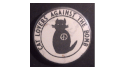
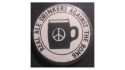
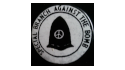
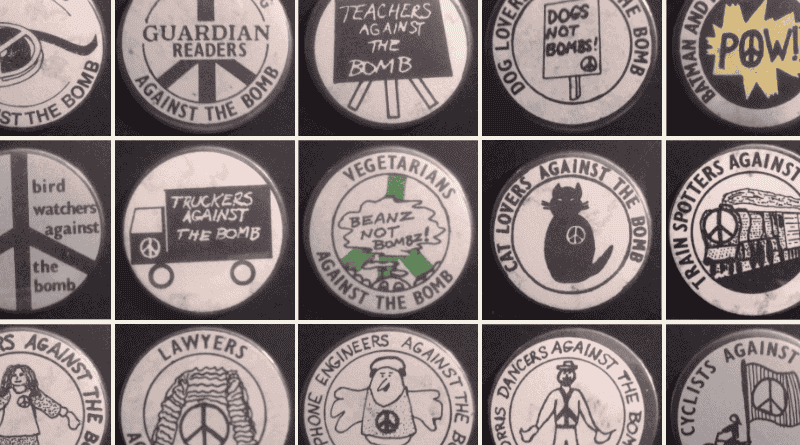
The against the bomb badges were a series of 1980s protest pins designed by Alasdair Beal for Leeds CND. Moving away from the standard peace symbol, the classic range paired specific demographics with hand-drawn illustrations. By introducing humour, designs like 'Cat lovers' and 'Real ale drinkers' subverted grim Cold War messaging and allowed ordinary people to express personal identity.
Sections
Badges
Showing 1 to 5 of 20 total badges
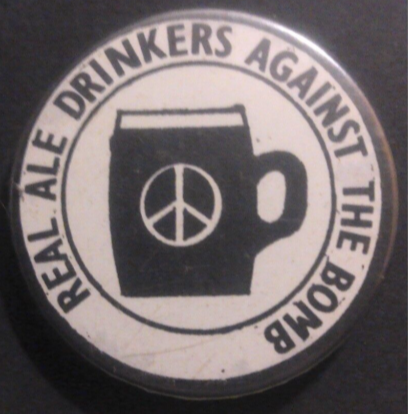
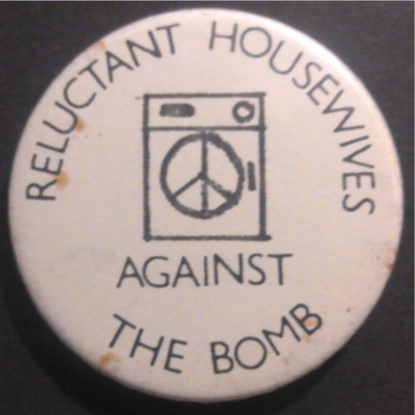
In numbers
170,000
Total number of badges produced and sold
3
initial designs started the classic range
20p
Retail price of badges in the 1980s
3.6cm
The standard diameter of each badge
1,000
Order threshold to negotiate custom rates and local colour combinations
20
Known amount of different designs in the classic range
100+
The amount of spin-off 'against the bomb' badges
60,000
The amount of real ale drinkers beer mats made
0
The amount of computers used in the designing and manufacturing
Timeline
-
1957Britain tests the hydrogen bomb
Anti-nuclear committees formed. The goal of 'unilateral nuclear disarmament' proved too academic for protests, leading to the adoption of the 'Ban the Bomb' slogan.
-
1958, EasterThe first Aldermaston March
Gerald Holtom's ND symbol was introduced alongside 'Ban the Bomb' placards. The press used the phrase 'against the bomb' as a literal descriptor of the marchers.
-
1981The original trio is designed
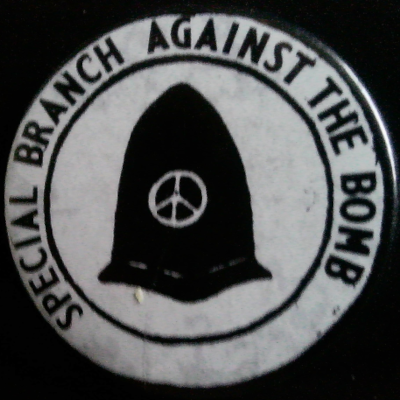
Responding to a request from activist Helen Jenner, Alasdair Beal designed Cat lovers, Real ale drinkers, and Special branch against the bomb, establishing the classic template.
-
1981, SeptemberGreenham Common peace camp established
The women-only peace camp began. It became closely associated with the Women against the bomb and Witches against the bomb badges.
-
1983, OctoberHyde Park demonstration
Hundreds of thousands marched in London. Activists sold the classic range of badges hand-to-hand from cardboard boxes to raise funds for local CND branches.
-
Mid-1980sThe range expands
Activists wrote to Leeds CND requesting specific demographics. The badges crossed into mainstream television and were adopted by American activists for a fundraising calendar.
-
Late 1980sOfficial reissues begin
The classic range proved enduringly popular, leading to the first official reissues of the original 1980s designs to meet continued demand.
-
2003The No Star Wars spin-off
Thom Yorke of Radiohead wore a Yorkshire CND No Star Wars spin-off shirt at live gigs, bringing the design aesthetic to a global music audience.
-
2023The beer mat revival
The Real ale drinkers against the bomb design was reissued on cardboard beer mats and distributed across UK pubs and taprooms.
-
Present dayArtists Against the Bomb
The International Campaign to Abolish Nuclear Weapons (ICAN) runs a global touring exhibition, demonstrating the ongoing use of the phrase in modern disarmament.
Brief history
From Ban the Bomb to Against the Bomb (1958 - 1981)
The Campaign for Nuclear Disarmament emerged in 1958 with a clear political demand. Ban the Bomb appeared on placards at the first Aldermaston March that Easter, alongside Gerald Holtom's newly designed nuclear disarmament symbol. Both became familiar features of British anti-nuclear protest.
The alternative wording, Against the Bomb, was already circulating within the movement. Women Against the Bomb organised meetings and demonstrations from 1958, using the phrase to describe a shared political position rather than a specific demand. The two expressions continued alongside one another.
Where Ban the Bomb addressed governments, Against the Bomb could identify the people opposing nuclear weapons. By the early 1980s, that distinction provided the basis for a new kind of campaigning badge, combining an individual's occupation, interests or identity with a common political message.
The original trio (1981)
In 1979, NATO agreed to deploy American cruise and Pershing II nuclear missiles in Western Europe, with cruise missiles destined for British bases. The decision helped revive CND, drawing new supporters into national demonstrations and local peace groups.
In 1981, Helen Jenner, who had established a local group called Cat Lovers Against the Bomb, asked her friend Alasdair Beal to design a badge for its members. Beal was a civil and structural engineer working in Leeds and an activist with Leeds CND.
Leeds CND became responsible for producing and distributing the designs. Alongside Cat Lovers Against the Bomb, Beal created Real Ale Drinkers Against the Bomb and Special Branch Against the Bomb.
All three appeared as new campaigning badges in the June - July 1981 edition of Sanity. The cat design was the first to sell out, prompting further production. Their familiar subjects, simple graphics and unexpected humour established a format that could accommodate almost any group or interest.
The drawing board (1980s)
Beal produced his designs entirely by hand, using the technical drawing skills and equipment familiar from his engineering work. Initial ideas were sketched in pencil before the finished outlines were drawn with fine Rotring technical pens.
Lettering was added using Letraset dry-transfer sheets, with individual characters carefully positioned and rubbed onto the artwork. Mistakes could be covered with Tipp-Ex correction fluid and redrawn. Without digital editing or computer graphics, even minor alterations required physical work on the original design.
The resulting artwork was deliberately economical. Strong outlines, clear lettering and limited colours allowed images and slogans to remain legible on badges measuring 3.6 cm in diameter. Finished designs were reproduced and assembled into metal pin badges using hand-operated mechanical presses.
Twenty-five pence a badge (1980s)
Affordability was central to the badges' appeal. The June - July 1981 edition of Sanity advertised the original three designs at 25p each, including postage and packing. Bulk discounts were also offered, allowing local peace groups to purchase badges for resale.
By February 1982, Leeds CND was advertising a more detailed pricing system, with discounts for orders exceeding 10 badges and postage waived on orders of more than 50. Larger orders could be negotiated separately, while special commissions and alternative colour combinations offered further possibilities for campaign groups.
The difference between wholesale and retail prices provided a straightforward means of fundraising. Money raised through badge sales helped support local CND activities, including campaign literature, meeting spaces and transport to demonstrations.
The system required relatively little capital and no elaborate retail infrastructure. Local groups could obtain affordable stock, sell it directly to supporters and retain the proceeds for their own campaigning work.
From Leeds to the streets (1980s)
The badges travelled through the informal networks that sustained Britain's peace movement. Leeds CND advertised its designs in publications such as Sanity and Socialist Challenge, reaching readers well beyond Yorkshire.
Orders arrived by post, often accompanied by cheques or postal orders. Volunteers packed and dispatched the badges through the campaign's distribution network.
Bulk supplies reached local CND branches, student unions and alternative shops. Independent bookshops, record shops and wholefood cooperatives provided outlets beyond conventional political meetings. In London, retailers such as the Hackney Book Group stocked badges alongside radical literature and other campaign materials.
At demonstrations, activists carried supplies in cardboard boxes and sold them directly to marchers. Major gatherings, including the 1983 Hyde Park demonstration against cruise missiles, brought together thousands of potential buyers in a single place.
The same badge might be purchased through a magazine advertisement, picked up in a bookshop or bought from a protest stall. Each route placed the anti-nuclear message into another part of everyday life.
A badge for almost everyone (1980s)
The initial three designs quickly developed into a much larger collection. By February 1982, Leeds CND advertisements were already offering badges for Morris dancers, teachers, dog lovers, Batman and Robin, and ageing hippies, alongside the original trio.
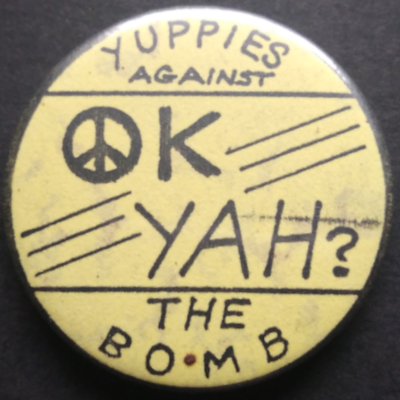
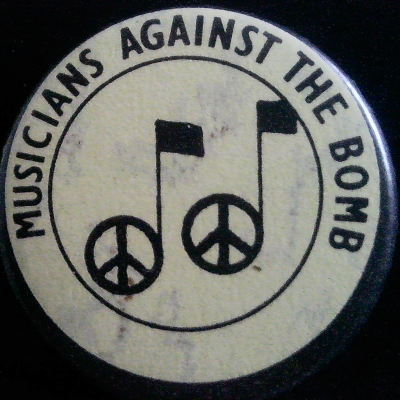
Further designs reflected occupations, hobbies, cultural interests and personal identities. Suggestions also arrived from campaigners who wanted badges acknowledging their own particular interests or affiliations. Badger 4 Peace believes the complete mass-produced Classic Range comprised 20 distinct designs, excluding prototypes and one-off custom commissions.
The humour lay partly in the unlikely combinations. Nuclear weapons were a matter of international politics and military strategy, yet the badges placed opposition to them alongside ordinary pursuits and familiar identities.
A teacher, birdwatcher or real ale drinker could express an individual interest within the same political statement. Repeated wording gave the collection a recognisable identity, even as its subjects became increasingly varied.
Beyond Beal's badges (1980s - 1990s)
The designs became part of the wider visual culture of the 1980s peace movement. Pinned to coats, denim jackets and bags, they appeared alongside political slogans, music badges and other expressions of personal identity. Their humour also made them recognisable outside conventional campaigning circles.
Accounts of their circulation include appearances in British television productions and demonstrators pinning badges onto police uniforms during anti-nuclear protests. The designs also travelled overseas. An American adaptation of Cat Lovers Against the Bomb inspired a fundraising calendar launched in Nebraska in 1984 to support Nebraskans for Peace.
The wording spread far beyond the Leeds CND collection. More than 100 other badge designs used variations of Against the Bomb, produced by different campaign groups and designers. Some represented particular occupations or interests, while others reflected local organisations, political affiliations or individual initiatives.
Not all belonged to Beal's range, nor did every use of the phrase necessarily derive from his designs. What linked them was a simple formula through which almost any group could declare its opposition to nuclear weapons.
The Classic Range lives on (1990s - present)
The end of the Cold War did not bring an end to the badges. Designs from the original collection continued to circulate, with smaller reissues produced using a different, more industrialised manufacturing process. Their lower price, possibly around 20p, may have reflected reduced production costs.
Surviving original badges became collectable objects, while Beal's artwork acquired new significance as a record of the movement's visual history. Beal also continued producing campaign graphics for Yorkshire CND.
In 2003, Radiohead singer Thom Yorke wore the organisation's No Star Wars T-shirt at live performances, bringing opposition to missile defence onto international concert stages. In 2023, Yorkshire CND revived Real Ale Drinkers Against the Bomb on tens of thousands of cardboard beermats.
The badges also entered the historical record through exhibitions and museum collections. Original Leeds CND sketches were exhibited in Sheffield in 2024, while The Peace Museum's Pins for Peace project in 2025 celebrated Beal's contribution to protest design.
The museum has also produced limited-edition prints based on his original artwork. Today, designs from the Classic Range remain available through Yorkshire CND, more than four decades after their introduction.
Created as inexpensive objects for an immediate political campaign, they have survived as historical artefacts and continuing expressions of opposition to nuclear weapons.