Special Branch against the bomb
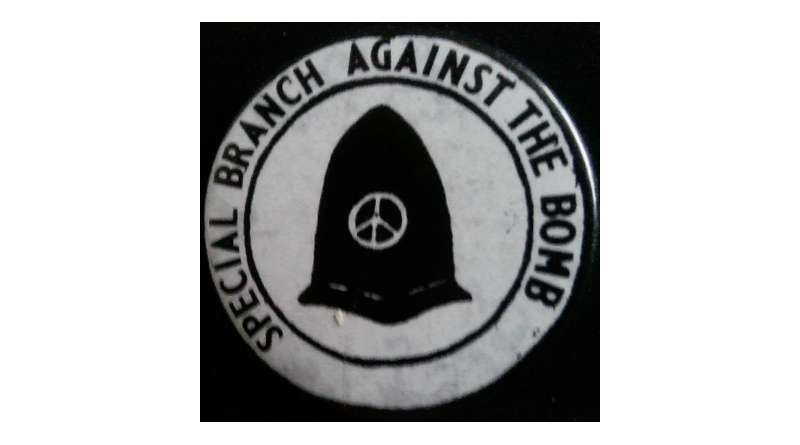
Special branch against the bomb is a vintage pin badge produced by Leeds Campaign for Nuclear Disarmament (CND) that pictures the police officers spying on peace campaigners switching sides.
A helmet and a peace symbol
The 'switching sides' is in the image itself. The custodian helmet is one of the most recognised symbols of British authority. The CND peace symbol is one of the most recognised symbols of dissent.
Special Branch was not the bobby on the beat. It was the plainclothes unit of British police forces tasked with monitoring threats to the state. In the 1980s, the state had decided that CND was one of them.
The branch that spied
Through the early 1980s, Special Branch officers and agents from the Special Demonstration Squad did not simply attend peace meetings and spy from the back. They made themselves useful. They turned up early, stayed late, and did the administrative work nobody else wanted to do.
In local CND offices across the country, undercover agents spent hours stuffing envelopes and folding leaflets. It was unglamorous work, and that was the point. It gave them access to membership lists, mailing addresses, and the minutes of private meetings without raising a single eyebrow.
Separately, MI5 ran its own man inside CND. Harry Newton, a civilian agent recruited to report from within, became so trusted that activists later recalled he was always the first to arrive and the last to leave.
These were not shadowy figures lurking in doorways. They were the people making the tea. The badge imagined them switching sides. The reality was that they had already made themselves at home.
Designed by Alasdair Beal, the Leeds-based designer behind the original against the bomb badge series, Special branch against the bomb took that reality and turned it inside out. It imagined the spies themselves pinning on the badge and joining the very movement they had been sent to dismantle.
The spy who told the truth
In 1985, MI5 officer Cathy Massiter blew the whistle. She revealed that the security services had been tapping the phones of CND leaders and planting undercover agents inside local groups across the country. It confirmed what many activists had long suspected.
Activists knew they were being watched. The badge was designed to be offered to the undercover officers standing at the back of their meetings — a small, pressed-tin act of defiance that cost less than a pound and said everything.
Part of a wider family
Special branch against the bomb was one of the first three against the bomb badges Beal designed, alongside Cat lovers against the bomb and Real ale drinkers against the bomb. Everything that came after grew from this original trio.
Between them, the three showed that opposition to the bomb was not confined to the usual suspects. A cat owner, a pub regular, even the officers paid to spy on the movement. The badges suggested they might all already be on the same side.
Somewhere, in a police filing cabinet, there is probably a report about Special branch against the bomb accompanied with the badge as evidence.