

Youth CND
Youth CND is the youth wing of the Campaign for Nuclear Disarmament, active since CND's earliest days and organised in its own right by the early 1960s. It became known for its presence on the Aldermaston Marches and, during the 1980s revival, for drawing a rival organisation set up by the Young Conservatives specifically to counter it. It continues today as Youth and Student CND, campaigning against Britain's Trident nuclear weapons system.
Sections
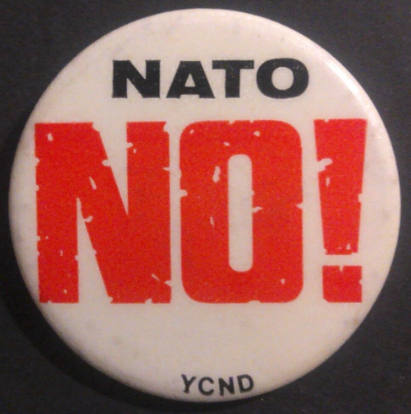
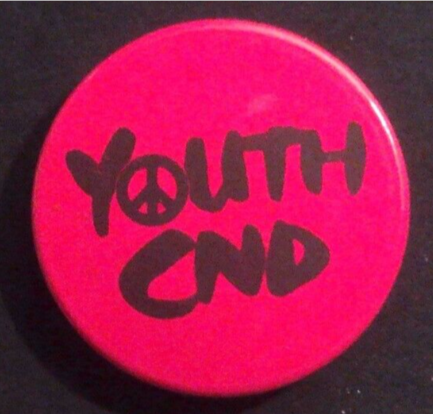
Badges
Showing 1 to 7 of 7 total badges




In numbers
8,000
Recorded membership peak of active school and college pupils during historical surges.
200
Delegates attending highly contested national youth annual policy conferences from local groups.
1/5th
Disproportionate voting power once held by a single dominant university branch.
6
Months of free digital taster membership offered to accelerate modern youth recruitment.
50p
Historical reduced subscription rate calculated to align with limited teenage pocket money.
16
Times more employment opportunities produced by renewable energy sectors than nuclear power.
2
Independent youth-focused media titles established to spread anti-nuclear ideas among schoolchildren.
5
Distinct specialist sections operating alongside the youth wing to co-author overlapping campaigns.
1
Independent ally network forged with the student-led movement, Schools Against the Bomb.
Timeline
-
1958Youth join the founding campaign
Young marchers formed a visible part of the first Aldermaston March and quickly adopted Gerald Holtom's new peace symbol as their own.
-
1960Colleges and Universities CND forms
A separate student body began organising undergraduates alongside CND's main branches, broadening the campaign's reach on campuses.
-
1961Youth CND gains its own identity
The youth section began keeping its own organisational records, formalising a structure that would remain part of CND for decades.
-
1963The Partial Test Ban Treaty
As the treaty eased public anxiety over atmospheric testing, CND's national membership fell away and Youth CND's activity receded with it.
-
1980A new generation returns
The campaign against cruise and Pershing II missiles brought young recruits back to CND in large numbers, reviving Youth CND after nearly two decades in the shadows.
-
1981A rival is set up to counter Youth CND
The Young Conservatives launched Youth for Multilateral Disarmament specifically to challenge Youth CND's growing influence, an operation CND's own magazine Sanity dubbed 'Government Dirty Tricks'.
-
1985A future political editor leads the rival campaign
Nick Robinson, later the BBC's political editor, took charge of Youth for Multilateral Disarmament and rewrote its briefing notes for speakers debating against Youth CND.
-
Present dayYouth and Student CND continues
The youth and student wings now campaign together as Youth and Student CND, organising through university societies and social media against the Trident weapons system.
Brief history
Youth in the early campaign (1958 - 1963)
Young people were part of the Campaign for Nuclear Disarmament from its earliest days, forming a visible presence on the Aldermaston Marches and adopting Gerald Holtom's new peace symbol as a badge of youth identity.
By the early 1960s that involvement had taken organisational shape. A separate Colleges and Universities Campaign for Nuclear Disarmament ran alongside the main body, while Youth CND itself had begun keeping its own records within the wider structure by 1961.
The symbol and the slogan 'Ban the Bomb' spread through school corridors and jazz clubs alike, and one poet later remembered the marches themselves as a kind of travelling festival, banjos and all.
The long eclipse (1963 - 1979)
The 1963 Partial Test Ban Treaty took the edge off public anxiety about atmospheric testing, and CND's national membership fell away for the best part of two decades.
Youth CND's activity receded along with it. Without a fresh generation of recruits or a pressing new threat to organise against, the youth section spent these years as a much smaller presence within the wider campaign.
Confronting a rival (1980s)
CND's revival after 1980, driven by the planned deployment of cruise and Pershing II missiles, brought Youth CND back into schools as an organising force in its own right.
It became visible enough to draw organised opposition. The Young Conservatives set up a rival group, Youth for Multilateral Disarmament, specifically to counter Youth CND's influence, supplying speakers to debate against it in school halls up and down the country.
Youth and Student CND today (2000s - present)
The youth and student wings have since merged into a single body, Youth and Student CND, which helps young people set up CND societies at their universities and colleges.
Its current campaigning runs mainly through social media and focuses on opposition to the Trident nuclear weapons system. Unlike Christian CND, Labour CND, Green CND and Ex-Services CND, it does not currently hold a guaranteed seat on CND's governing council.
Articles
login fail 0 results