
The tradition of nonviolent direct action: Part 2
Reformation and radical dissent (1500–1647). This is part 2 of a 4-part series exploring how nonviolent direct action developed from early Christian conscience into organised forms of communal resistance.
Re-emergence and transformation
By the 16th century, the question of conscience had returned with new urgency. Across Europe, individuals and communities began to challenge religious authority, often at great personal risk. In doing so, they made dissent more visible, more communal and more difficult to suppress.
The practices first seen in early Christianity had not disappeared. They had persisted in quieter forms and were now re-emerging in a changed and more turbulent world.
In this period, patterns resembling what would later be recognised as nonviolent direct action (NVDA) began to take clearer shape — not yet as a defined method, but as shared practices of refusal, separation and collective discipline.
Between empire and reform (c.300–1500)
By the 4th century, Christianity had moved from the margins of the Roman world to the centre of political power. As the church became increasingly aligned with empire, earlier traditions of refusal and separation were overshadowed by new structures of authority.
Yet the impulse toward conscience and nonviolence did not vanish. It survived in quieter forms. Monastic communities, dissenting groups and individual believers continued to explore ways of living apart from violence, coercion and worldly power.
At times, movements emerged that challenged both church and state authority, calling for a return to simpler forms of faith. These groups were often marginalised or suppressed, and their influence rarely endured.
As a result, practices resembling NVDA remained scattered, intermittent and often hidden during this period.
Reform and authority (1500s)
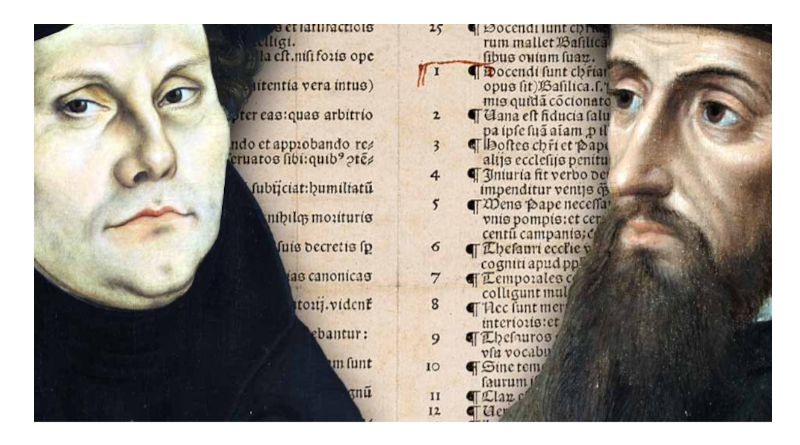
The 16th century Reformation brought a new wave of religious upheaval. Reformers such as Martin Luther and John Calvin challenged the authority of the Roman Catholic Church and called for a return to scriptural foundations.
Yet the Reformation did not break the link between religion and power. In many regions, emerging Protestant churches became closely tied to political authority, and dissent was often suppressed rather than tolerated.
This created a new tension. If authority could be challenged in one form, could it be challenged more radically?
Radical dissent beyond the Reformation
Alongside mainstream reform movements, smaller and more radical groups began to emerge. Among them were the Anabaptists, who rejected infant baptism and argued that faith must be a voluntary commitment made by informed adults.
This position carried significant consequences. It challenged both church authority and the social order that depended upon it, reopening fundamental questions about conscience, obedience and the limits of authority.
Nonviolent practices among dissenters
Within some of these movements, patterns of behaviour emerged that echoed earlier traditions of Christian refusal, now expressed in more structured and communal ways.
Many Anabaptists and later Mennonite communities rejected military service, refused to swear oaths and withdrew from systems they believed to be unjust. They formed alternative communities grounded in shared discipline, mutual support and separation from political power.
Such commitments often brought severe consequences. Anabaptists were persecuted by both Catholic and Protestant authorities, facing imprisonment, exile and execution. Yet many continued to practise adult baptism, refuse military service and gather in defiance of official prohibition. These acts of visible, collective refusal made their dissent unmistakable.
These actions were not organised campaigns in the modern sense. Yet they marked a significant development: sustained, communal practices of non-cooperation rooted in conscience.
Tension and divergence
Not all radical movements followed this path. Events such as the uprising in Münster revealed that dissent could take very different forms. While some groups turned toward violence, others rejected it entirely. Nonviolence was not inevitable. It was a conscious and often difficult choice.
In contrast, leaders such as Menno Simons helped shape communities committed to nonviolence, discipline and separation from coercive authority. These traditions preserved and refined practices that would later be recognisable as part of NVDA.
England before the Quakers (1600–1647)
By the early 17th century, England was experiencing profound religious and political instability. Disputes over authority, worship and governance created an environment in which new movements could emerge.
Questions of conscience, obedience and resistance were no longer abstract. Individuals and communities were increasingly forced to decide whether to comply with laws and practices they believed to be unjust.
Although the language of NVDA did not yet exist, the conditions were forming in which such practices could emerge more openly and collectively.
A tradition ready to transform
Across these centuries, traditions of conscience, refusal and communal discipline had re-emerged and taken more visible form. They were no longer hidden or isolated, but they remained fragmented and uncertain.
What had not yet appeared was a movement capable of sustaining these practices over time and turning them into a coherent method.
Out of this turbulent world, a movement would emerge that transformed dissent into organised nonviolent witness.
This movement would become known as the Quakers.