| | by admin | | posted on 13th May 2026 | Symbols | | views 16 | |
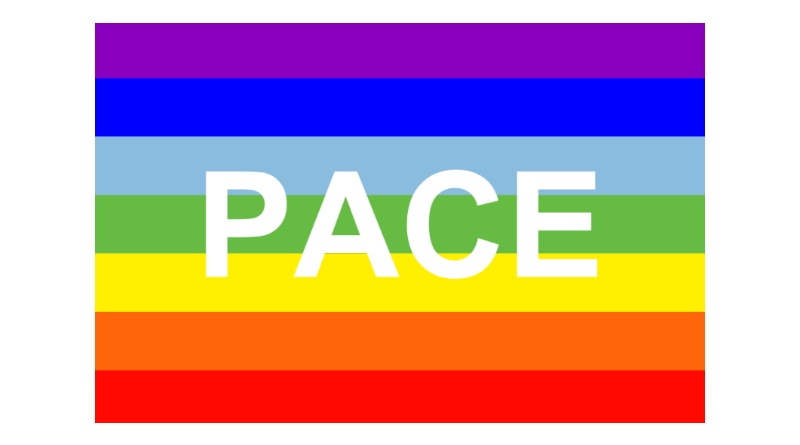
The Rainbow Peace Flag is an international symbol of anti-war sentiment, non-violence, and global solidarity that began during a 1961 protest march in Italy.
Featuring seven horizontal stripes arranged in a unique reverse-rainbow pattern, the Rainbow Peace Flag is designed to go against convention. Unlike a natural rainbow, it places cool colours like purple and violet at the top, transitioning down to warm colours like orange and red at the bottom.
Across the centre of the flag, the word 'PACE' (the Italian word for peace) is traditionally printed in bold white capital letters. Depending on the region where it is flown, this text is sometimes translated to 'Peace,' 'Paix,' or 'Frieden.'
The seven colours represent the diversity of humankind coming together in harmony. The flag serves as a visual declaration that peace is a universal human right that transcends national borders, political affiliations, and cultural divides.
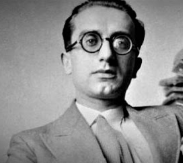
The flag was created in Italy in 1961 by Aldo Capitini, a prominent philosopher, anti-fascist, and pioneer of the Italian non-violence movement. Capitini wanted a vibrant, recognisable symbol for the first Perugia-Assisi March for Peace, a 24-kilometre peace walk that took place on 24 September 1961.
Capitini drew direct inspiration from the British multi-coloured flags used during the famous Aldermaston marches. These annual anti-nuclear demonstrations, organised by the Campaign for Nuclear Disarmament (CND) from 1958 onwards, featured protestors carrying early iterations of rainbow-striped peace banners. Inspired by this striking visual display of resistance, Capitini rushed to have several coloured stripes sewn together just before his own historic Italian march began.
The design also drew inspiration from Genesis in the Bible, where the rainbow symbolises a covenant of peace between God and humanity after the Great Flood. Capitini adapted this ancient spiritual symbol into a secular emblem for modern geopolitical harmony.
A traditional, natural rainbow displays violet on the inner curve (bottom) and red on the outer curve (top). However, Capitini purposefully inverted this colour sequence, placing the dark, cool violet and blue shades at the topmost peak of the flag.
This inversion carries profound symbolic weight. In traditional vexillology and folklore, an upside-down or inverted symbol often signals distress, urgency, or a direct break from normal order—similar to flying a national flag upside down during a crisis. By putting violet at the top, Capitini visually signalled that the state of the world was in deep peril due to the Cold War and the looming threat of nuclear annihilation.
Furthermore, the layout creates a striking visual contrast. Placing the dark, sombre blues and purples at the very top represents a heavy sky or a troubled world, which then opens up and transitions into the bright, warm reds, oranges, and yellows at the bottom. This progression symbolises humanity emerging out of darkness and descending into the warmth of harmony and peaceful coexistence.
For decades, the 'Pace' flag remained a beloved staple of European activist circles, particularly within Italy. Its transition into a globally recognised icon occurred in 2002 during the buildup to the United States-led invasion of Iraq.
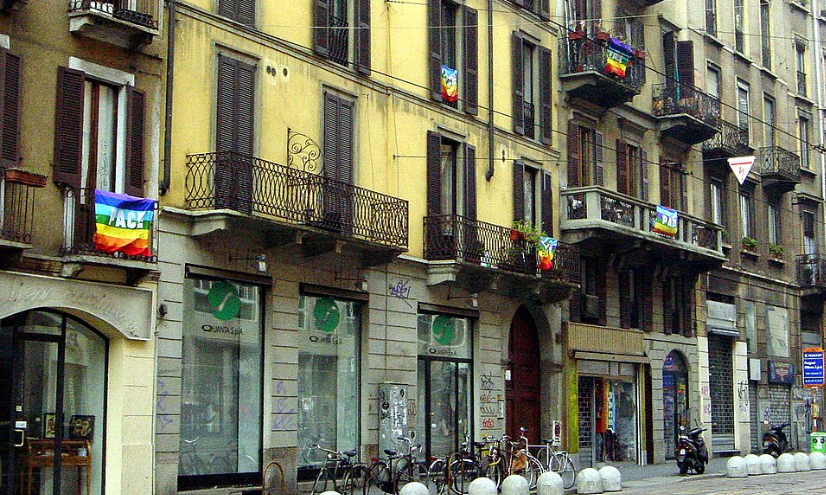
Activists launched a massive public campaign in Italy called Pace da tutti i balconi ('Peace from every balcony'). Millions of Italian citizens bought the flag and hung it outside their windows, turning entire city blocks into cascading walls of rainbow colours.
The phenomenon quickly spread across Europe and the rest of the world. Images of European cities blanketed in the 'Pace' flag flooded international news broadcasts. By 2003, the flag had become the definitive visual backdrop for the largest anti-war protests in human history, cementing its status as a global icon of resistance against military conflict.
Today, the Rainbow Peace Flag continues to fly at human rights rallies, climate demonstrations, and anti-war protests worldwide. Its endurance relies on its simplicity and its timeless message.
Because it shares colours with the LGBTQ+ Pride flag, the Peace flag is often subject to modern confusion. However, it maintains its distinct identity through its seven-stripe configuration, reverse colour order, and explicit written text.
More than sixty years after Aldo Capitini first stitched its panels together, the flag remains a living monument to his vision. It serves as a colourful, undeniable reminder that humanity's ultimate goal must always be coexistence and peace.