
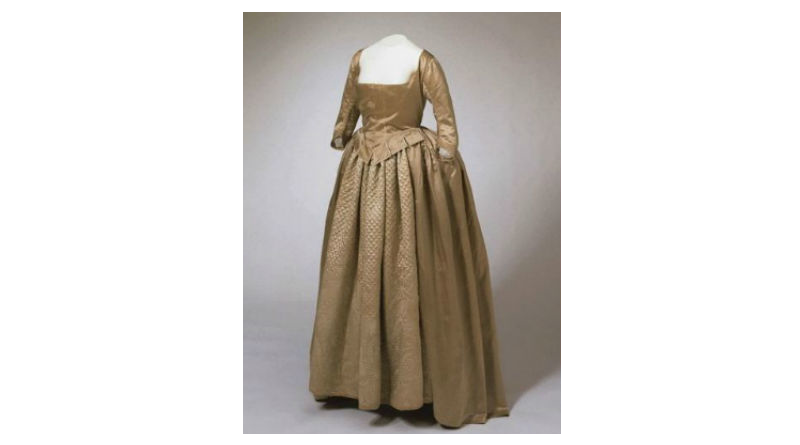
Quaker plain dress
The Quaker plain dress is an example of the historical practice known as Plain Dress, which is dressing simply as an expression of faith.
Historical Plain Dress
The dress was woven in Philadelphia in the 1790s from beige silk satin and plain weave ribbon. Currently it is on display at the city's Museum of Art.
Silk was a costly material by the standards of the time, yet the dress's design is deliberately restrained, avoiding decorative trim or fashionable flourish. Clothes like this let people recognise Quaker identity outwardly, in a look that signalled seriousness, modesty, and resistance to social display.
Plain Dress favoured durable fabrics and a conservative cut. The aim was not simply uniformity, but a visible expression of humility and a desire to remain spiritually distinct from the surrounding culture.
Friends were wary of clothing that drew attention to wealth or status, believing that outward simplicity helped cultivate inward discipline.
As part of their testimony to Simplicity, Quakers traditionally avoided lace, embroidery, and ornamental excess, as well as unnecessary cuffs, collars, lapels, and buttons. Over time this approach hardened in some communities into an easily recognisable style, while in others it remained a more flexible guideline rather than a strict code.
Founding Friend George Fox (1624–1691) repeatedly urged fellow Quakers to resist fashion as a spiritual distraction, arguing that clothes could shape the soul as much as they reflected it. He wrote:
“Friends, keep out of the vain fashions of the world; let not your eyes, minds, and spirits run after every fashion (in attire) of the nations; for that will lead you from the solid life into unity with that spirit that leads to follow the fashions of the nations, after every fashion of apparel that gets up: but mind that which is sober and modest, and keep to your plain fashions, that you may judge the world's vanity and spirit, in its vain fashions, and show a constant spirit in the truth and plainness.”
Plain modern
Most Quakers gradually moved away from traditional Plain Dress in the late 19th and early 20th centuries as Friends became more integrated into wider society.
Today, some speak instead of dressing in 'plain modern' ways. This means wearing contemporary clothing while deliberately avoiding conspicuous branding, luxury fabrics, or fast-changing fashion trends.
For these Friends, the emphasis lies less on reproducing historic Quaker garments and more on expressing the same spiritual concerns in present-day form. Many now weigh ethical sourcing, fair wages, environmental impact, and durability when choosing what to wear, linking modern wardrobes back to older Quaker concerns about simplicity, integrity, and restraint.
Seen together, the 18th entury Quaker plain dress and today's plain-modern choices tell a continuous story. The fabrics and cuts may have changed, but the underlying question remains recognisably Quaker &emdash; How should what people wear reflect the kind of life they are trying to live?