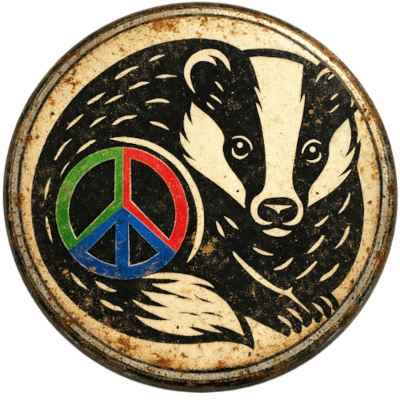

Peace Pledge Union badges
The The Peace Pledge Union (PPU), founded in 1934, is the UK's oldest secular pacifist organisation.
The The Peace Pledge Union (PPU), founded in 1934, is the UK's oldest secular pacifist organisation.
Through nearly a century of resistance to war and militarism, the PPU has used powerful visual symbols � especially badges and the White Poppy � to convey its message of nonviolence, remembrance, and ethical protest. These small items carry big meaning: a quiet but unwavering commitment to peace, publicly worn on the lapel, coat, or banner.
The White Poppy: symbol and badge of conscience
The most iconic PPU symbol is the White Poppy, introduced in 1933 by the Women’s Co-operative Guild and distributed by the PPU from 1934 onward. Unlike the red poppy associated with military remembrance, the white poppy stands for:
- Remembrance of all victims of war, both civilian and military
- A commitment to peace and the rejection of future wars
- A critique of militarism and the use of war as a political tool
Wearing the white poppy is a public act of conscience, challenging the dominance of military remembrance culture. Each November, thousands of people wear it to show their commitment to peaceful alternatives to violence.
Types of White Poppy badges
- Paper White Poppies: Distributed by hand or by post, these are pinned or stuck to clothing and worn throughout Remembrance season. Simple and handmade in feel, they emphasise grassroots activism over corporate branding.
- Enamel White Poppy Badges: First introduced in the 1980s, these provide a more permanent and durable form of the poppy. Some versions include the PPU dove, and others have slogans like �Remember Them All� or �Peace.�
- Dual Badges: Some people wear white poppies alongside red ones. The PPU has issued brooches or holders to make this visible pairing intentional, to express both remembrance and pacifist conviction.
- Crafted White Poppies: Handmade knitted or crocheted poppies are also worn, especially by supporters wishing to add a personal or local activist touch.
Other Peace Pledge Union badges
Beyond the poppy, the PPU has created a range of badges and pins over the decades to promote peace, conscientious objection, and anti-militarist values. These badges are typically modest, stark, and meaningful � prioritising message over fashion.
Historic and Contemporary badges
- �I Renounce War� Badge (1930s�40s): A black-and-white enamel pin featuring the original PPU pledge. Worn by members who had publicly committed to oppose all war.
- Conscientious Objector Badge: Created during WWII and revived in later decades, this badge was worn in solidarity with those imprisoned or marginalised for refusing to fight.
- �Teach Peace� Badge: Issued to educators and supporters of the PPU’s school outreach, this badge is part of a campaign to promote nonviolence in education and resist armed forces recruitment in schools.
- �Militarism Off Campus� Buttons: Used by student groups opposing military careers fairs or cadet programs in universities and sixth-form colleges.
- Modern White Dove Pins: A minimalist badge featuring the white dove of peace, used at vigils, conferences, and peace walks to identify PPU supporters.
PPU badges tend to avoid loud branding or commercial aesthetics. They often use black-and-white tones, clean fonts, and clear messaging. Their quietness is deliberate: they are made to witness rather than advertise.
Key Campaigns and movements
1934�1939: The Peace Pledge and founding years
The PPU began with a simple public pledge: �I renounce war, and am therefore determined not to support any kind of war.� Thousands wore pledge badges as a visible statement of conscience in a time of growing militarism.
WWII and Conscientious Objection
The PPU defended the rights of Conscientious Objectors and supported war resisters. Badges and armbands were worn by volunteers aiding bombing victims while refusing to support the war effort.
1950s�60s: Anti-Nuclear Movement
While groups like CND led mass demonstrations, the PPU focused on consistent, pacifist anti-nuclear messaging. Badges from this period include slogans like 'No Bomb' or 'Peace Without Victory.'
1980s: White Poppy controversy and resurgence
After Prime Minister Margaret Thatcher condemned white poppies, sales rose dramatically. Campaigners wore enamel white poppies with pride, turning badge-wearing into a form of protest against state militarism.
2000s�2020s: Peace education, anti-militarism
- Teach Peace in Schools: PPU campaigners distribute white poppies and badges to teachers, resisting the rise of armed forces’ involvement in education.
- Resist Armed Forces Day: Badges from these campaigns challenge the glamorisation of military service and question the role of national celebrations in promoting recruitment.
- Digital Badging: During the COVID pandemic, digital white poppy badges circulated widely, enabling virtual protest and online remembrance.
Why Badges Matter
For the PPU, badges are more than accessories � they are tools of witness. Whether worn on a coat, passed at a vigil, pinned to a rucksack, or posted online, they declare a pacifist’s stance in a militarised culture. They invite conversation, often challenge assumptions, and quietly resist the status quo.
Through nearly a century of war, remembrance, and resistance, the Peace Pledge Union’s badges have carried a consistent message: remember with compassion, resist with conscience, and work for peace.