| | by admin | | posted on 13th May 2026 | Symbols | | views 6 | |
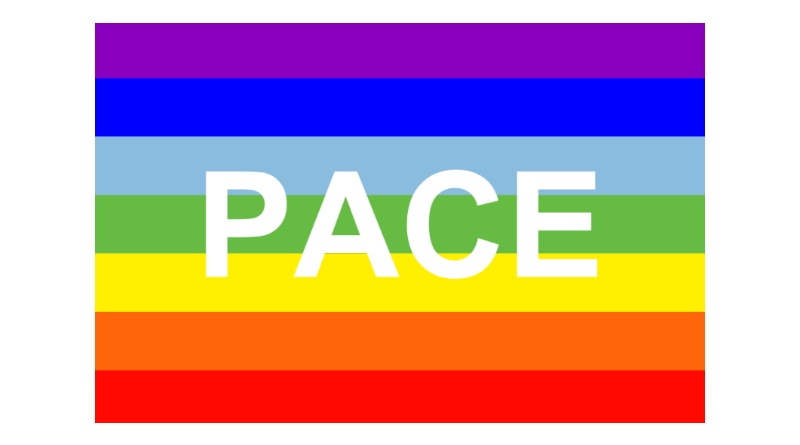
The PACE flag is a symbol that ceases to be a gentle emblem of harmony by painting a definitive command across the colors of the rainbow—becoming a vocal, architectural act of defiance against the machinery of war.
The flag emerged on September 24, 1961, from the practical needs of the inaugural Perugia-Assisi Peace March. Inspired by the British Aldermaston protests, the Italian philosopher Aldo Capitini sought a unifying visual marker for the crowd.
He recognized that a march required more than just bodies in motion; it required a highly visible focal point. He asked local women in Perugia to sew strips of colored cloth together, crucially instructing them to add 'PACE',the Italian word for peace,across the center.
This straightforward, physical labor anchored the abstract philosophy of nonviolence to a specific, tangible object. It provided the marchers with a functional instrument of protest to carry across the Umbrian landscape.
The PACE flag disrupts quiet neutrality through the deliberate addition of typography. By stamping a stark, capitalized word across the center stripes, the fabric ceases to be a mere spectrum of colors.
The bold, white lettering forces the viewer to read a statement rather than merely observe a pattern. This textual intervention fundamentally alters the mechanics of the image.
It transforms the cloth into a vocal, unmistakable demand. It functions less as a traditional flag and entirely as a permanent, flexible protest placard.
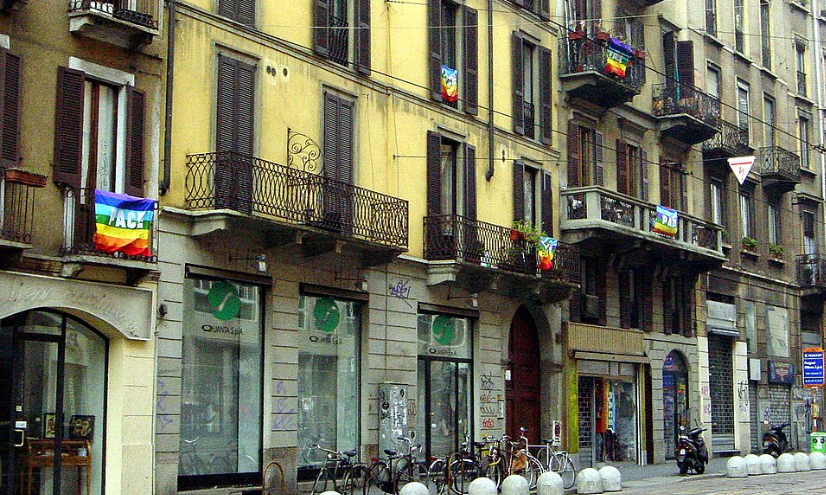
The flag achieved widespread prominence decades later, during the buildup to the 2003 invasion of Iraq. It became the centerpiece of the Pace da tutti i balconi (Peace from every balcony) campaign across Italy.
Over a million citizens draped the fabric from their windows, terraces, and apartment railings. This mass adoption fundamentally shifted the symbol from a marching tool to a stationary, architectural intervention.
The sheer volume of flags visually altered the facades of entire cities, creating an inescapable blockade of public opinion. It allowed ordinary people to weaponize their own domestic spaces.
By securing the flag to their own homes, citizens turned the private sphere into a highly visible, public barricade against state military action.
Today, the PACE flag remains a persistent fixture in global anti-war movements. It is no longer confined to Italian balconies, having spread internationally as a highly adaptable tool of civilian protest.
It is deployed wherever citizens seek to visually disrupt the normalization of military conflict. The flag is routinely hung from windows, scaffolding, and barricades to protest ongoing modern warfare and the global arms trade.
Unlike a poster that tears or a chant that fades, the fabric endures the elements. By transforming ordinary cloth into a fixed, public declaration, the flag ensures that the demand for peace remains a visible, unyielding Statement.