Irish Famine pot
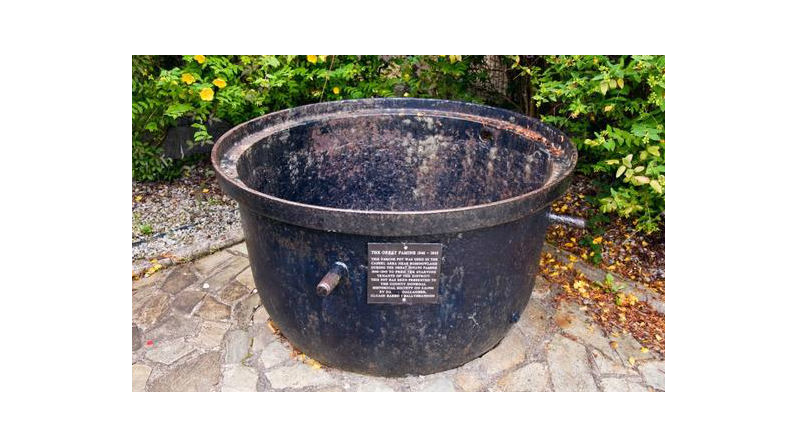
The Irish Famine pot is a cast-iron cooking pot, one of 294 sent to Ireland by Quakers during the Great Hunger and now displayed at the Irish Famine Museum.
The Great Hunger and the Quaker response
In 1845, Ireland's potato crop failed. The starvation and disease that followed tore through the population, and became known as the Great Hunger.
At the time there were around 3,000 Quakers in Ireland. Many of them were merchants and business people. They could not let what was happening to their fellow citizens go unanswered, so they appealed to the worldwide network of Friends for help.
Donations and funds came from Quakers across the globe. Friends began their relief efforts by sending clothes. However, as the scale of the hunger became apparent, Friends realised a change in emphasis was needed.
Making and shipping the pots
A year later, in 1846, Quakers began addressing the food crisis directly. They shipped and distributed 294 large cast-iron pots that became known as Famine pots. The Darby family of Quakers, pioneers in the Industrial Revolution, made the pots at their iron foundry in Coalbrookdale, Shropshire.
Quakers hired ships to transport the Famine pots as well as food, medicine and supplies. Upon arrival in Ireland, the shipments made their way up and down the country. As part of their testimony to Equality, Quakers helped whoever they could regardless of religion.
The Famine pots were used to make soup from ingredients such as oatmeal, vegetables, nettles and herbs. Local people were organised to help with cooking and feeding. Thus the soup kitchen, in a form still recognisable today, came into existence.
Sustainable food production
In the spring of 1847, the English Quaker William Bennett arrived in Ireland to visit the famine's worst-hit areas. On his arrival he offered local children some biscuits to eat with their seaweed. In his own account, he described witnessing “the deep-sunk poverty” of the peasantry, along with scenes of misery and degradation that stayed with him.
Realising that a more long-term, sustainable method of food production was needed, Bennett began distributing seed himself in Mayo and Donegal. The Quaker Central Relief Committee repeated the effort on a larger scale the following year, purchasing almost 60 tonnes of seed. An estimated 32,000 acres of crops resulted, feeding around 150,000 people.
Alongside agricultural work, Quakers issued loans and grants for industrial employment, ranging from small-scale cottage industries to larger factory-based enterprises. The aim was to restart the rural economy and encourage self-sufficiency.
When friends were few and far between
By 1849, the famine had subsided and the worst of the Great Hunger was over. Many groups and organisations had helped combat the disaster. The Irish Famine pot is now an exhibit at the Irish Famine Museum, County Roscommon, and has a plaque attached to its front — one line of which reads:
The Great Hunger is also remembered by Kindred Spirits, a commemorative sculpture in County Cork, Ireland.