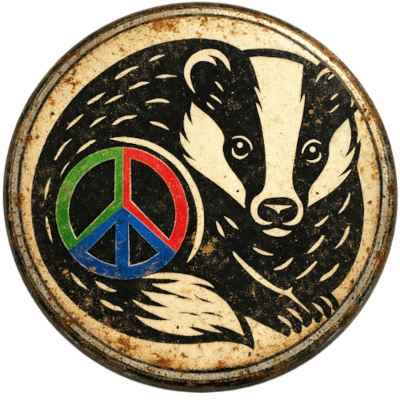

CND: The first-ever badges
The first CND badges were hand-made ceramics by Eric Austen, a pacifist and conscientious objector, whose creative vision helped establish the peace symbol as a lasting emblem of protest.
TThe first CND badges were hand-made ceramics by Eric Austen, a pacifist and conscientious objector, whose creative vision helped establish the peace symbol as a lasting emblem of protest.
From symbol to badge
In 1958 Gerald Holtom created the nuclear disarmament symbol, combining semaphore signals for N and D. The design was first seen on banners and placards during the Aldermaston March, but it only became an enduring emblem when it was turned into a badge. That transformation was the work of Eric Austen, a ceramicist, pacifist, and conscientious objector during the Second World War.
Eric Austen’s background
Austen had refused military service in the 1940s, instead working in civilian roles and aligning himself with the traditions of nonviolence and peace witness. He later taught art and developed an interest in ceramics. By the late 1950s he had joined Kensington CND, where he quickly became involved in creative work to support the campaign. Friends and fellow activists remembered him as quiet but deeply committed, seeing in the peace symbol a visual language that could speak across nations and classes.
The first ceramic brooches
Austen made the very first CND badges by hand, shaping small round brooches from clay, firing them, and painting Holtom’s symbol in black against a white ground. His choice of ceramic was deliberate: he explained that if the world were reduced to ashes by nuclear war, fired pottery would be among the few human artefacts to endure. In this way, the badges stood as both a protest and a warning of what might remain after catastrophe. Each piece was unique, fragile, and distributed only in small numbers among early marchers.
Moving to mass production
Because Austen’s ceramics were limited, the movement soon arranged to have the design made into tin and celluloid badges. These cheap, mass-produced buttons meant that thousands of marchers could wear the emblem at once. From the late 1950s onwards, the peace symbol spread rapidly through popular culture, appearing on coats, bags and banners across Britain and beyond. The shift from handmade to mass production ensured that the emblem reached a global audience.
Authorship and influence
Holtom devised the design, but it was Austen who first imagined it as something wearable. His artistic and pacifist sensibility gave the badge a special weight: not merely a token of membership, but a personal statement carried on the body. The original ceramic brooches are now rare and highly valued by collectors, while the early tin and celluloid versions are recognised as the starting point of a global protest tradition.
Legacy of the first badges
The first CND badges set the pattern for protest memorabilia as both political and personal. They linked individual conscience to collective action, reminding each wearer of the stakes at hand. Austen’s creative act helped transform Holtom’s design into a living symbol - one that still resonates today on badges, banners and beyond. His role as a conscientious objector gave added depth to the object’s meaning: a symbol of refusal, resilience and radical hope.