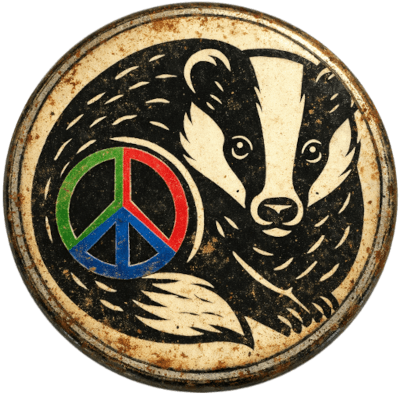

CND badges & postcards: History & timeline
The first CND badges emerged alongside the establishment of the Campaign for Nuclear Disarmament (CND) in 1958.
The first CND badges emerged alongside the establishment of the Campaign for Nuclear Disarmament (CND) in 1958. They were initially distributed during the Aldermaston March, a protest against Britain's nuclear weapons.
The initial badge design was crafted by Eric Austin of Kensington CND, who suggested using the symbol as a badge to fundraise and spread awareness.
>Materials and Design
The original badges were handmade, produced using ceramic and black paint. These were quite fragile but became a cherished symbol of commitment to the cause.
As the movement expanded, the badges were mass-produced using more durable materials like metal, plastic, and enamel.
Early versions were often simple, featuring the iconic symbol in black and white, emphasizing its stark, bold message.
Design Variations
While the initial designs were monochromatic, later badges incorporated vibrant colors to appeal to broader audiences and symbolize diverse aspects of the peace movement.Rainbow versions symbolize diversity and inclusivity.
Green and blue are often associated with environmental causes connected to the anti-nuclear movement.
Materials
From ceramics to enamel and metal, each material reflected the period's production capabilities and financial support.Textures: Some badges included textured backgrounds or glitter to make them visually striking.
Symbolic Use and Messaging
Slogans and Text: Over time, CND badges began to feature additional text, such as:-
"Ban the Bomb" � a direct call to action.
- "Peace Now" � emphasizing immediate disarmament.
- "No More Hiroshimas" � a reference to the catastrophic consequences of nuclear warfare.
Personalization: Activists often customized their badges with additional messages to highlight specific issues, such as opposing nuclear power or military conflicts.
Distribution and PopularityIn the 1960s and 1970s, CND badges became a popular item at protests, rallies, and festivals. They were sold to fundraise for CND's activities and distributed as symbols of solidarity.
The badges crossed borders, becoming popular in the United States, especially during the Vietnam War era, and in Europe during the escalation of the Cold War.
The simplicity and impact of the design allowed it to transcend language barriers, making it a universal peace emblem.
Cultural Impact
Fashion Statement: During the 1960s, wearing a CND badge became a statement of countercultural identity, symbolizing opposition to militarism and alignment with progressive, leftist politics.
Pop Culture
Bands like The Beatles and artists like John Lennon embraced the symbol, further embedding it in the zeitgeist of the time.
Modern Activism
Today, CND badges are worn by activists at peace protests, climate marches, and anti-war demonstrations, symbolizing continuity in the fight for disarmament.
Collectability
Vintage CND badges from the 1960s are now collectible items, valued for their historical significance and craftsmanship.
Some collectors focus on specific eras or themes, like anti-Vietnam War badges or those from the Greenham Common Women's Peace Camp � a notable women's peace movement against nuclear weapons in the 1980s.