2nd generation CND
2nd Generation is a vintage pin badge that branded a new youth movement, one that inherited its cause from the 1960s but forged its own distinct, counter-cultural style.
A silhouette in black and white
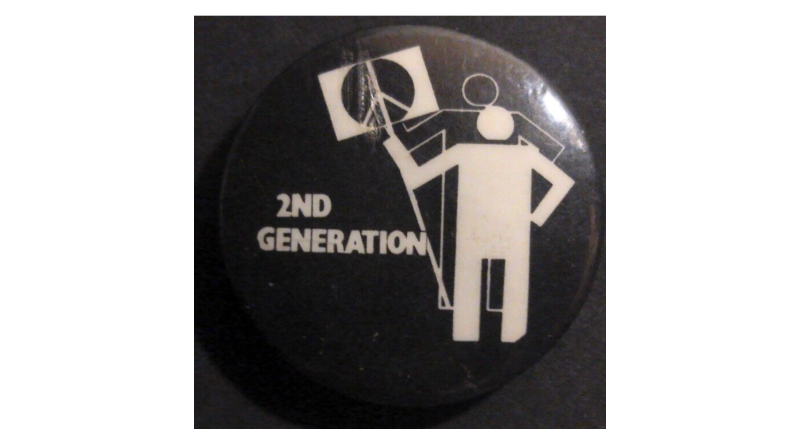
The badge's design is stark and minimalist. Against a plain black background, a solid white, gender-neutral figure stands with a hand on its hip, holding a placard aloft. The graphic style deliberately mirrors the sharp, black-and-white aesthetic of the Two-Tone Ska and Post-Punk record sleeves that were central to British youth culture at the time.
Stepping out from behind the solid figure is a fainter, outlined version of a person in the exact same pose. This is the visual statement of the badge: the solid child stepping forward from the transparent shadow of the parent. The placard, held by both, contains the simple lines of the CND peace symbol that connects them across time.
An inherited shadow
The outlined figure represents the first generation of the British anti-nuclear movement. They were the parents who walked the first Aldermaston Marches in the late 1950s, protesting the UK's own atomic weapons programme. They established the cause, creating the symbols and protest methods that would endure for decades.
Their children, who came of age in the late 1970s and early 80s, were the first demographic to have lived their entire lives under the shadow of the bomb. The threat of thermonuclear war was not a sudden crisis for them, but the constant, low hum of the world they were born into, woven into the fabric of their childhood through public safety films and school-yard rumours.
A new generation finds its voice
This new wave of activists consciously branded themselves as the 'Second Generation'. The name was adopted by Youth CND, the youth wing of the Campaign for Nuclear Disarmament, and even became the title of their official magazine. It was a declaration of both continuity and difference.
As the magazine's editors wrote in 1982, they had, "Our own things to say and our own way of saying them." They rejected what they saw as the polite, moderate lobbying of their parents' era. Instead, they embraced a culture of confrontational direct action, merging their politics with their musical tastes. This badge, pinned to a denim jacket or a school bag, was a wearable statement of identity.
The meaning of a third generation
While Youth CND never produced an official '3rd Generation' badge, the concept of inheritance continues. Today, the term can be understood in three distinct, physical ways. The modern youth climate movement acts as a practical third generation, linking the threat of nuclear war to environmental collapse.
In Japan, the generations are biological. The children and grandchildren of the Hibakusha, the direct survivors of the 1945 atomic blasts &mdas work to preserve the living testimony of their elders. And in a technical sense, the protest has also moved on. The 'Second Generation' activists were fighting against what engineers call Generation II nuclear reactors. The power stations built since the late 1990s are known as Generation III. The machine, just like the protest against it, has evolved.