
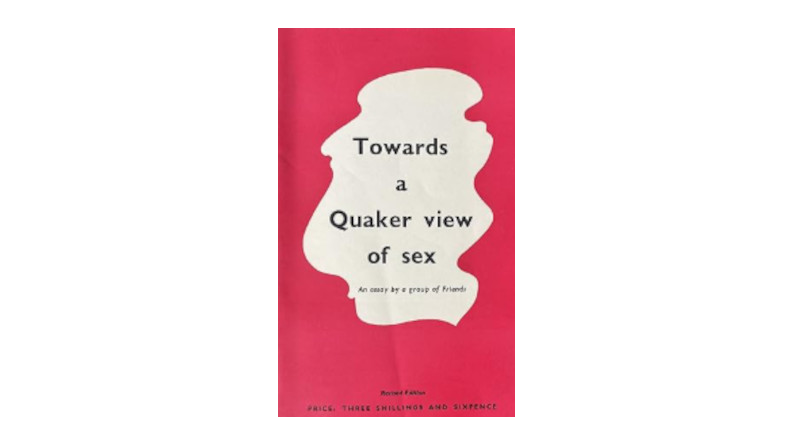
Towards a Quaker view of sex
First published in 1963, Towards a Quaker view of sex was a bold and progressive pamphlet by a group of British Friends that paved the way for Quakers to embrace LGBTQ+ rights.
The pamphlet emerged at a time when attitudes toward sexuality were rigid, moralistic, and frequently homophobic. It challenged the religious orthodoxy of its day, advocating for a deeper spiritual understanding of human relationships — one centred not on strict rules, but on love, responsibility, and personal integrity.
The work was commissioned by a group of Friends concerned with the pastoral care of young people, and it was produced by an informal study group that included doctors, theologians, and teachers. Their collective efforts resulted in a document that questioned the assumptions underlying both church doctrine and wider social attitudes. Though unofficial in status, the pamphlet has become one of the most significant Quaker contributions to modern ethical thought.
Challenging assumptions and affirming love
The central premise of the pamphlet was simple but profound: that the value of a sexual relationship should be judged not by its conformity to traditional forms — such as marriage or heterosexuality — but by the presence of love, commitment, and the growth of both people involved. This was a startling perspective in a time when the Church of England and wider society maintained strict moral codes, particularly condemning any form of homosexual activity.
The pamphlet asserted, “An act which expresses love and affection between two people and gives pleasure to them both does not cease to be good because it is homosexual.” In saying this, the authors broke ground not just within the Religious Society of Friends but across religious discourse in Britain more broadly. Their view was grounded not in dogma, but in careful discernment of the Spirit and a trust in personal conscience held in community.
Responses and repercussions
At the time of its publication, the document was both praised and denounced. Some Friends were shocked by its frankness and its perceived departure from Christian teaching, while others were deeply moved by its compassionate tone and ethical clarity. Though never formally adopted by the Society, the pamphlet influenced many Meetings' attitudes and opened space for wider discussion within Quaker communities about sexuality, conscience, and equality.
Its impact extended beyond the Quaker world. Progressive clergy, educators, and campaigners for gay rights cited it as an example of faith-led justice. It was also used by some as a resource in the years leading up to the partial decriminalisation of homosexuality in the UK in 1967. The text was reprinted several times and continues to be referenced in discussions about Quaker ethics and social witness.
A living legacy within the Society of Friends
Today, Towards a Quaker View of Sex is remembered as a courageous moment in Friends' unfolding testimony to truth. It helped prepare the way for later affirmations of same-sex relationships and marriage equality within Britain Yearly Meeting. In many ways, it represents the Quaker approach to difficult issues: listening deeply, honouring the Light in all people, and choosing compassion over conformity.
Though some of its language and assumptions now feel dated, its core message remains vibrant — every person has the right to love and be loved equally.