Friends of the Earth
Friends of the Earth International is a federation of independent environmental groups founded in 1969 by David Brower after he left the Sierra Club, formalised in 1971 at Roslagen, Sweden. Now spanning more than 70 countries, it campaigns against governments, lenders and corporations on climate, forests and pollution, increasingly through litigation such as the 2021 Shell ruling.
Sections
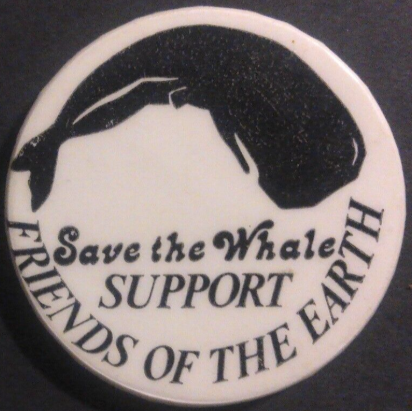
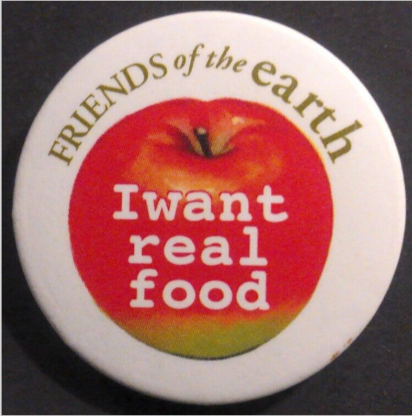
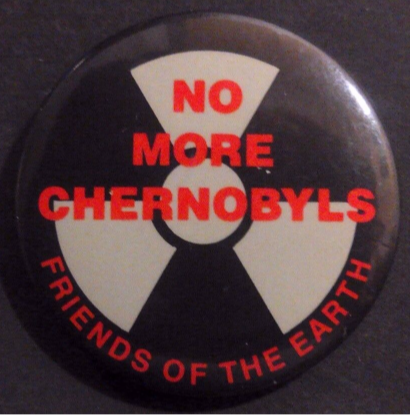
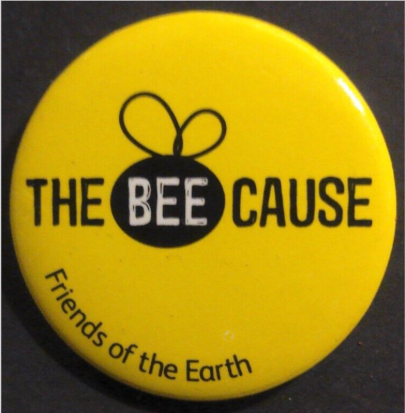
Badges
Showing 1 to 10 of 24 total badges
In numbers
4
Founding nations that initially met to officially form the international network.
73
Active national member groups uniting to form the international environmental network.
5,000+
Local grassroots activist groups implementing environmental initiatives across six continents.
2 million+
Dedicated members and supporters operating across the extensive global framework.
200,000
Signatories to the petition driving the landmark UK Climate Change Bill.
52%
Documented drop in rural bus services identified through commissioned transit research.
14
Major retailers implementing pollinator protection policies following targeted scorecard campaigns.
180,000
Arctic Indigenous people securing maritime consultative status through joint network advocacy.
13
Nations endorsing a diplomatic declaration to combat digital climate disinformation.
Timeline
-
1969The roots of practical environmentalism
David Brower founded the organisation in the United States, seeking a resolute stance against industrial pollution and nuclear energy.
-
1971, 15 JuneA global network forms
Representatives from four nations met in Sweden to establish a sturdy, international framework to weather global ecological challenges.
-
1971The Schweppes bottle action
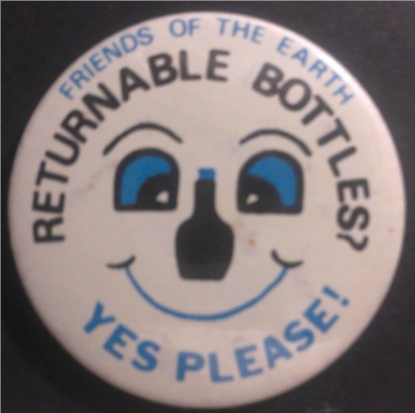
The British branch returned thousands of discarded glass bottles to the company's headquarters, making an invisible waste problem entirely visible.
-
1986Expanding the witness
The federation held its first annual meeting in the Global South, anchoring the community in a broader, international practice of justice.
-
2008, 26 NovemberThe anchor of the law
Following relentless public pressure, the United Kingdom passed the Climate Change Act, securing a legally binding framework to reduce emissions.
-
2021, 26 MayHolding power to account
The community secured a landmark legal victory in the Netherlands, forcing a major fossil-fuel corporation to drastically cut its carbon output.
-
Present dayAn ongoing practice of ecological witness
The organisation continues to campaign across more than 70 countries, standing firmly alongside vulnerable communities to protect the earth.
Brief history
Brief history
A break from tradition (1969)
In the late 1960s, David Brower led the Sierra Club, a prominent conservation group in the United States. He grew frustrated with their traditional approach of simply preserving wilderness and negotiating with industry.
Brower believed that protecting nature required challenging the industrial systems causing the damage. This fundamental disagreement led to his departure in 1969.
Alongside Donald Aitken, Gary Soucie, and Jerry Mander, he founded Friends of the Earth in the United States. The new organisation was built specifically to focus on practical, direct action.
A global network forms (1970 - 1971)
The organisation's focus on direct action quickly inspired activists overseas. By 1970, independent groups began forming in other nations, including Friends of the Earth United Kingdom, established by Graham Searle.
In 1971, representatives from the United States, Sweden, the United Kingdom, and France met to link these groups together. They officially formed Friends of the Earth International, creating a federation of equal, independent groups.
That same year, the United Kingdom branch established its voice by returning thousands of glass bottles to the Cadbury-Schweppes headquarters, protesting single-use waste.
Rooting in the community (1970s - 1980s)
The new federation chose not to centralise its operations. Instead, it encouraged ordinary citizens to take responsibility for their own local environments.
Throughout the 1970s and 1980s, a vast network of grassroots chapters formed across Europe and North America. Local residents took practical action to protect their immediate landscapes.
They tested community rivers for industrial pollution and organised blockades against rural nuclear waste sites. This proved that environmentalism could be a daily community practice.
A shift toward the Global South (1986 - 1990s)
As the federation expanded, it became clear that environmental destruction disproportionately affected poorer nations. To address this reality, the federation held its 1986 annual meeting in Malaysia.
It was their first gathering in the Global South, marking a shift in how they approached global justice. The organisation began to link ecological health directly to human rights.
They introduced the concept of 'ecological debt'. They argued that wealthy nations must take responsibility for consuming more than their fair share of global resources.
The anchor of the law (2005 - 2008)
As the scientific consensus on global warming solidified, the organisation recognised that physical protests needed to be backed by structural legal changes.
In the mid-2000s, the United Kingdom branch launched 'The Big Ask'. The campaign mobilised nearly 200,000 citizens to directly lobby their Members of Parliament for strict environmental protections.
This steady public pressure yielded a historic result. In 2008, the government passed the Climate Change Act, securing the world's first legally binding framework to reduce carbon emissions.
The courtroom witness (2021)
Entering the modern era, the federation concluded that voluntary corporate guidelines were failing to prevent large-scale pollution. They decided to take their practice of witness into the courtroom.
The community resolved to hold multinational corporations legally accountable for their environmental impact. They sought to force systemic change through the law.
This strategy led to a landmark victory in May 2021. The Dutch branch successfully sued Shell, resulting in a court order that forced the corporation to drastically reduce its global carbon output.
Into the climate era (Present day)
Today, the federation operates in over 70 countries. With more than two million members, it remains a resilient network of grassroots activists.
Modern campaigns focus heavily on climate justice and food sovereignty, working to ensure that vulnerable communities can weather a changing climate.
More than 50 years after David Brower left traditional conservation behind, the organisation continues his original work — challenging environmental destruction at its root through practical, community action.