Drawing Hope: Children’s art for peace
Drawing Hope is a children's art exhibition that was on display at Friends House during early 2026. The exhibition grew out of a Korean peace initiative and became a wider reflection on imagination, friendship and the possibility of peace.
Exhibition at Friends House
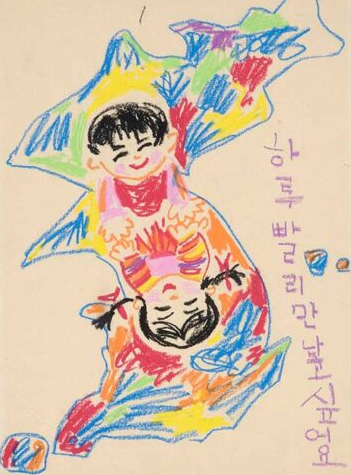
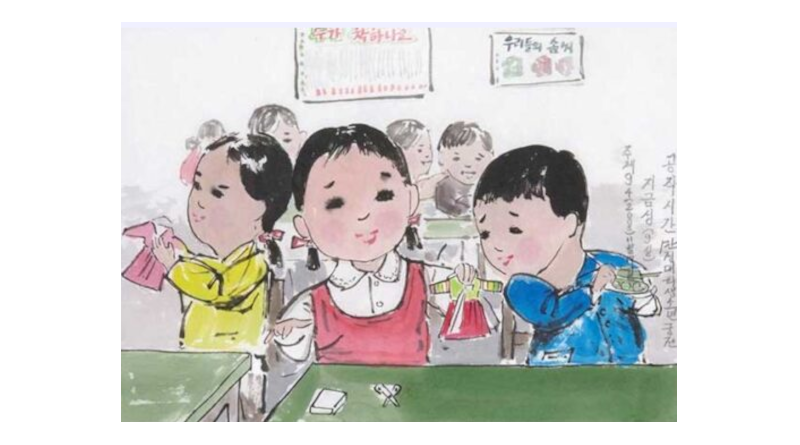
At Friends House in London, visitors entering the exhibition space encounter a wall of drawings. Some are painted in bright crayon colours, others in careful pencil lines, each one showing how a child sees the world. They are unmistakably the work of children: self-portraits, flowers, flags, families, birds and scenes of friendship. At first glance they might seem simple. Yet together they form a quiet challenge to one of the most enduring political divisions of the modern world — the Korean peninsula.
The exhibition, titled Drawing Hope, gathers artwork created by children from across the world. Many of the drawings imagine peace across borders or friendship between people who have never met. In a world where international conflict is usually discussed through military strategy or political power, these images offer a radically different perspective.
For Quakers, the exhibition resonates with a long tradition of peace witness.
“Children often see each other simply as other children. When they draw pictures of friendship across borders, they remind us that peace begins with recognising our shared humanity.”
Seen in that light, the drawings become more than colourful images. They become small acts of imagination — glimpses of a future that has not yet arrived but can still be envisioned.
But the project behind the exhibition did not begin as a global initiative. Its origins lie in a more specific story: an attempt to build human connection across the divide between North and South Korea.
From “Hello, My Friend” to Drawing Hope
The project that eventually became Drawing Hope began in the mid-1990s on the Korean peninsula. In 1996 a South Korean organisation called Okedongmu Children in Korea launched a peace initiative titled Hello, My Friend!.
The idea was simple but quietly radical. South Korean children were invited to create drawings and messages for children living in North Korea. These pictures expressed friendship, curiosity and the hope that one day the children of the two countries might meet freely.
At a time when contact between ordinary citizens in the two Koreas was extremely limited, the drawings became a symbolic bridge. They allowed children to imagine one another not as enemies shaped by political narratives, but simply as other children.
In a region where decades of tension had hardened into political reality, the act of drawing became a form of quiet diplomacy. A picture of a house, a family or two children holding hands could carry a message that political language often struggled to express.
Over time the project expanded. Organisers began inviting children from other countries and regions affected by conflict to contribute drawings about peace and friendship. As the collection grew, it gradually evolved into an international exhibition. Today that travelling collection is known as Drawing Hope.
The Korean divide: A war that never ended
The origins of the project make more sense when seen against the background of the Korean divide itself. The peninsula remains one of the most enduring unresolved conflicts in the world.
Following the end of the Second World War, Korea was divided into two states. That division hardened after the Korean War of 1950–1953, a devastating conflict that left millions dead and families permanently separated. The war ended not with a peace treaty but with an armistice.
The border between North Korea and South Korea, known as the Demilitarized Zone, remains one of the most heavily militarised frontiers on Earth.
For many Koreans the consequences of that division are deeply personal. Families were separated during the war and many have never been reunited. Generations have grown up on either side of the border with little opportunity for direct contact.
In South Korea, the North can feel both close and distant at the same time. It lies only a short distance away, yet remains politically inaccessible. In North Korea, contact with the outside world is tightly restricted. For children growing up in these circumstances, the people on the other side of the border are often imagined rather than known.
That absence of human contact is one of the quiet tragedies of long conflicts. When people never meet, fear and suspicion can grow where understanding might otherwise develop.
Why children’s drawings matter
There is something uniquely powerful about the way children express ideas about peace. Unlike political speeches or diplomatic negotiations, children’s drawings communicate their meaning directly and emotionally.
Many of the images in the exhibition include symbols that appear across cultures: sunshine, animals, homes, trees and people holding hands. These pictures may look uncomplicated, but they contain an important insight. They reveal how naturally children imagine connection.
Peace scholar Dong Jin Kim reflected on the significance of the drawings when the exhibition opened.
“When children draw themselves reaching out to others across borders, they remind us that hostility is not inevitable. The ability to imagine friendship is the first step toward building it.”
Children are not bound by the political narratives that shape adult thinking. They are less invested in ideological rivalries and more open to imagining relationships that transcend them.
Seen together, the drawings form a quiet conversation between children in different parts of the world. They remind us that even in places shaped by conflict, young people often imagine the future differently from the divisions they inherit.
In that sense, children’s art becomes more than an expression of creativity. It becomes a reminder that peace often begins in the imagination long before it appears in politics.
Sometimes it begins with a child picking up a pencil and drawing the world as it could be.