
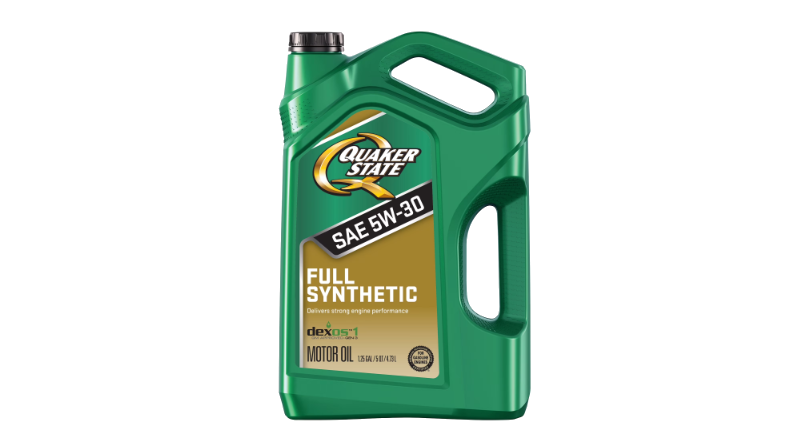
Can of Quaker State Motor Oil
A Can of Quaker State Motor Oil represents how Pennsylvania companies used the word 'Quaker' to signal trust and heritage, even when they had no connection to the Quakers.
The Quaker name
One of the curiosities of American commercial culture is the sheer number of companies that have adopted the word 'Quaker' into their name despite having no link to the Religious Society of Friends. This is especially true in Pennsylvania, whose nickname - the Quaker State - has shaped local branding for well over a century. The term 'Quaker' became a regional shorthand for trustworthiness, purity and plain dealing, qualities that many businesses were eager to project.
As a result, the Quaker name appears on oils, chemicals, meats, furniture, banks and breweries, often confusing consumers who assume a religious pedigree that simply is not there. Quaker State Motor Oil is the best-known example of this phenomenon, but it is far from the only one. When viewed together, these brands illustrate how the cultural memory of Quakerism has been commercialised, regionalised and sometimes misunderstood.
The Quaker State
Pennsylvania's connection to the term 'Quaker' begins with the colony's founding by William Penn, a prominent Quaker, in 1681. The Province of Pennsylvania was conceived as a place of religious tolerance, with significant early settlement by the Religious Society of Friends. Over time, the state came to be known informally as the Quaker State in recognition of this Quaker heritage and its association with Penn's “holy experiment.”
That nickname carried cultural weight. Businesses across Pennsylvania adopted 'Quaker' or 'Quaker City' in their trade names as a way of linking themselves to the state's reputation for Quaker-style values - honesty, reliability and plainness - even when they had no religious connection. The term 'Quaker State' thus became more than just a regional moniker: it became a marketing device. The company behind Quaker State Motor Oil drew explicitly on this regional identity when choosing its brand name, signalling both Pennsylvanian origin and the moral halo associated with Quakerism.
History of Quaker State Motor Oil
Quaker State Motor Oil began in Pennsylvania's early twentieth century oil industry, centred around Oil City and the wider region. Its founders were not Friends, nor did they make any religious claims. Instead, they drew directly on the nickname of their home state. Quaker State was already used informally to describe Pennsylvania, due to William Penn's founding of the colony and its strong early Quaker presence.
By adopting the phrase as a brand, the company wrapped its lubricants in the symbolism of dependability, purity and technical integrity. For decades, a green-and-white Quaker State can on the garage shelf signalled Pennsylvanian engineering and old-fashioned reliability rather than any spiritual endorsement. The success of the brand helped fix the idea that 'Quaker' could be a commercial marker of trust, detached from its religious roots.
Why 'Quaker' became a desirable brand identity
From the late nineteenth century into the mid-twentieth, American culture attached a set of virtues to the figure of the Quaker: honesty, purity of materials, steady behaviour, industriousness and a wholesome connection to the colonial past. These stereotypes, although often oversimplified, made the Quaker image a powerful marketing tool. The figure of the plain, trustworthy Quaker became part of a wider advertising language, even when few consumers knew much about actual Quaker beliefs or practices.
Businesses based in Pennsylvania, and especially in cities like Philadelphia, Pittsburgh and Reading, took advantage of both this cultural halo and their location in the Quaker State. The word 'Quaker' could therefore embody both moral character and regional pride in a single stroke. To print the word prominently on a shop front, tin can or delivery truck was to say, in effect, “You can trust this - it comes from Pennsylvania and carries the reputation of the Quakers.”
Other non-Quaker 'Quaker' brands
Pennsylvania and the surrounding region have produced a long list of companies adopting the name, none of which have formal connections to the Religious Society of Friends. Among them are: